
Sandblasting Room for Aerospace Component Manufacturing in Tianjin
Our valued clients from Tianjin, China, are tier‑one suppliers to Airbus and other leading aerospace original equipment manufacturers, specializing in the production of titanium and aluminum alloy structural components for commercial and military aircraft.
The aerospace industry represents the pinnacle of surface treatment requirements, where precision, cleanliness, and repeatability are not just desired but mandated by stringent international standards. This case study details the design, installation, and commissioning of a cleanroom-integrated sandblasting room at a major aerospace component manufacturer in Tianjin China, the heart of Chinese aerospace industry.
The customer, a Tier 1 supplier to Airbus and other major aerospace OEMs, specialises in the manufacture of titanium and aluminium structural components for commercial and military aircraft. Their product range includes wing ribs, fuselage frames, landing gear components, and engine mounting brackets. The surface preparation of these components requires not only the removal of oxidation and contamination but also the creation of a precisely controlled surface roughness profile to optimise the adhesion of subsequent thermal spray coatings and structural adhesive bonds. The existing manual blasting cabinet was unable to meet the increasing production volume and the tightening quality requirements of the latest Airbus specifications.
Project Details
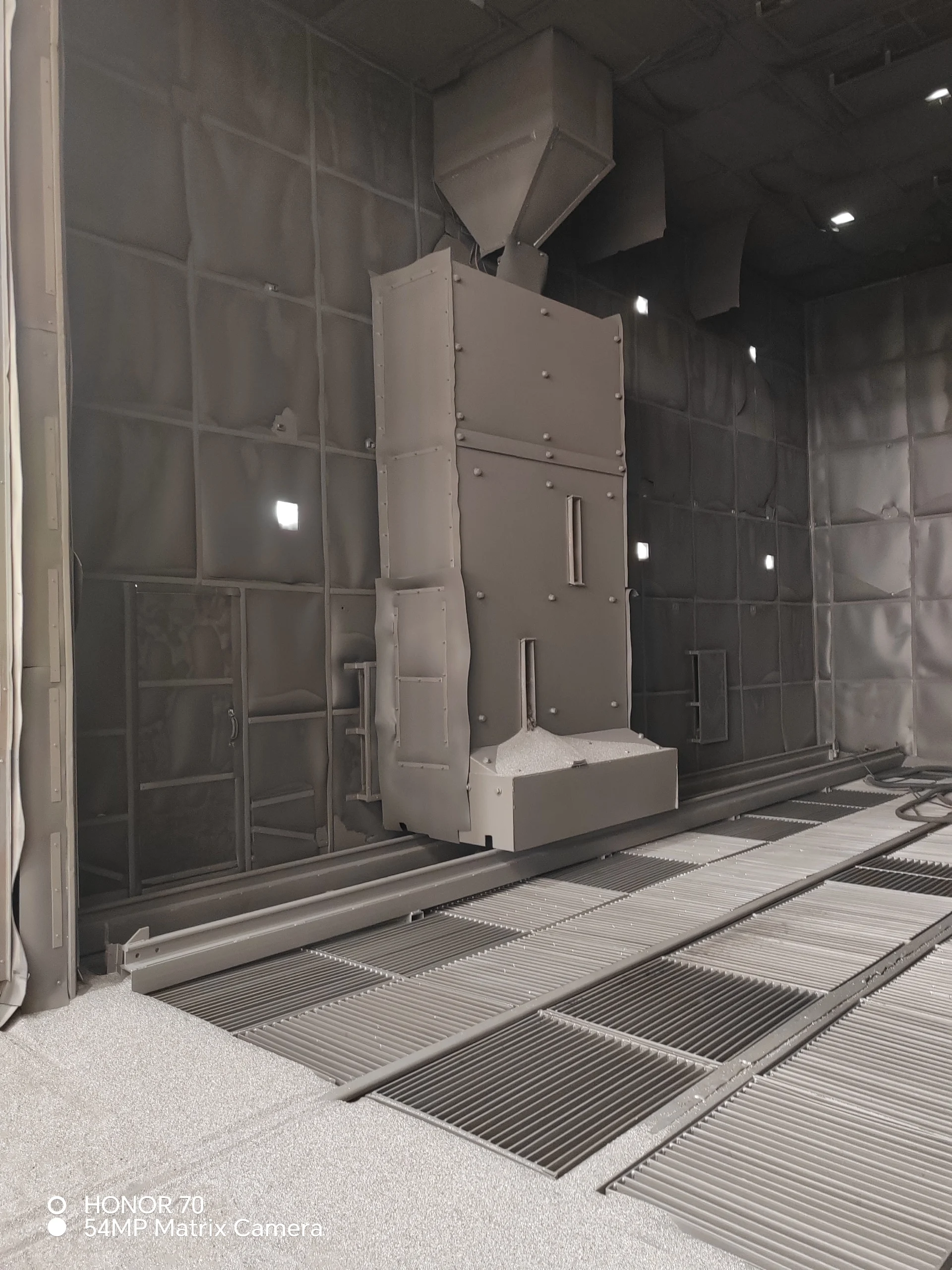
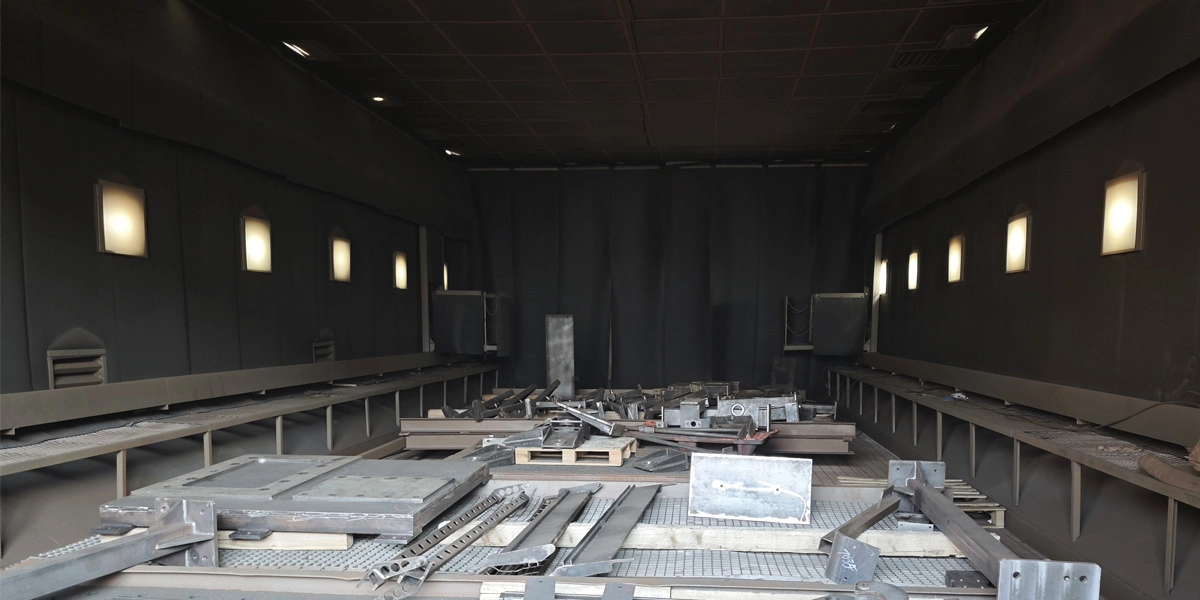
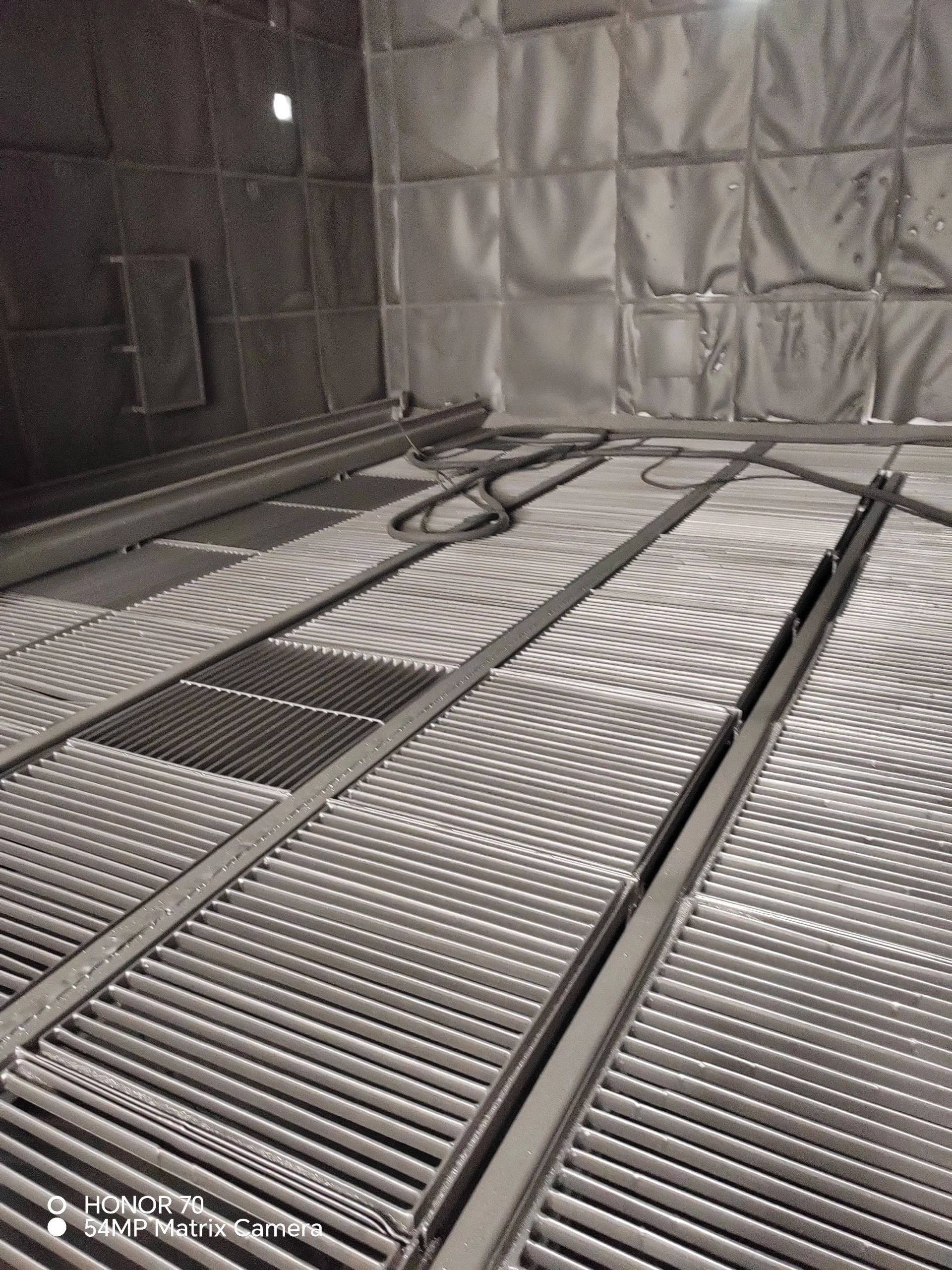
The sandblasting room measures 18 metres in length, 9 metres in width, and 5.5 metres in height, and is constructed as a Class 100,000 (ISO Class 8) cleanroom environment. The walls are made of 75 mm thick insulated panels with a white, smooth, non-shedding interior finish, meeting the particle emission requirements of ISO 14644-1. All internal surfaces, including the floor, are designed to be easily cleanable and resistant to the chemicals used in the cleaning and passivation processes that follow blasting.
A distinctive feature of this installation is the use of a robotic blast nozzle manipulation system, developed in collaboration with a leading European robotics manufacturer. A 6-axis industrial robot, mounted on a 7th-axis linear track, holds the blast nozzle and follows pre-programmed toolpaths generated from the 3D CAD models of the components. This robotic system ensures unprecedented repeatability in surface roughness, with process capability indices (Cpk) exceeding 1.67 for the target Ra value of 3.2 micrometres, a level of consistency that is virtually impossible to achieve with manual blasting.
The abrasive used is a premium-grade aluminium oxide (alumina) with a tightly controlled grit size distribution of 120 to 220 mesh. This abrasive was selected for its ability to create the specific surface profile required for the subsequent plasma spray coating of titanium components. The abrasive recovery system features a precision vibrating screen with 5 separation decks, a high-intensity rare-earth magnetic separator for removing any ferrous contamination that could compromise the corrosion resistance of the titanium parts, and an ultrasonic cleaner for final abrasive conditioning. The system maintains the abrasive cleanliness to a level where ferrous contamination is kept below 5 parts per million, verified by spectrometric analysis.
The pressure blast system consists of 2 precision blast pots, each with a 0.3 cubic metre capacity and equipped with microprocessor-controlled abrasive metering valves. These valves regulate the abrasive flow to an accuracy of plus or minus 2 percent, ensuring consistent blasting parameters throughout the process. The blast pressure is controlled by a proportional-pressure regulator with a range of 1 to 8 bar, adjustable in increments of 0.1 bar. All process parameters, including blast pressure, abrasive flow rate, robot speed, and number of passes, are recorded and stored in a database for full traceability, meeting the requirements of EN 9100 (Aerospace Quality Management System).
The dust collection and environmental control system is engineered to maintain the cleanroom classification. A HEPA-filtered dust collector, with a filtration efficiency of 99.97 percent at 0.3 micrometres, ensures that no abrasive dust escapes into the surrounding manufacturing area. The room is maintained at a positive pressure of 15 Pascals relative to the adjacent areas, preventing the ingress of airborne contaminants. Temperature is controlled at 22 degrees Celsius plus or minus 2 degrees, and relative humidity is maintained at 45 percent plus or minus 5 percent, creating optimal conditions for both the blasting process and the subsequent handling of the sensitive aerospace components.
Since its commissioning in April 2025, this sandblasting room has processed over 2,000 aerospace components with zero rework due to surface preparation defects. The robotic system has reduced the blasting time per component by an average of 45 percent compared to the previous manual process, while the consistent surface quality has extended the life of the subsequent plasma spray coatings by approximately 20 percent, as verified by accelerated life testing. The customer has described the installation as ‘a transformational investment’ that has positioned them to win additional contracts from both Airbus and Boeing.
Need advice?
Need advice? Call or WhatsApp us, and you’ll get a reply within 5 minutes!
- (86)-0532-88136558
- (86)13589238091
- disa@disachina.com