
Abrasiveblasting Room for Oil and Gas Pipeline Plant in Houston, USA
This case introduces a large‑scale blast room installation project at one of North America’s pipe‑coating factories located in Houston, Texas, USA.
The oil and gas pipeline industry demands the highest standards of surface preparation to ensure the long-term performance of anti-corrosion coating systems. A single coating failure on a buried or subsea pipeline can result in catastrophic environmental damage and costs running into millions of dollars. This case study presents a large-scale sandblasting room installed at a pipeline coating facility in Houston, Texas, USA.
The customer operates one of the largest pipeline coating plants in North America, providing FBE (Fusion Bonded Epoxy), 3LPE (Three-Layer Polyethylene), and 3LPP (Three-Layer Polypropylene) coating services for oil and gas transmission pipelines. The plant processes steel pipes ranging from 6 inches to 56 inches in diameter, with lengths up to 12 metres. With the surge in pipeline construction projects across the Permian Basin and the Gulf of Mexico, the customer needed to expand their surface preparation capacity to meet the growing demand.
Project Details
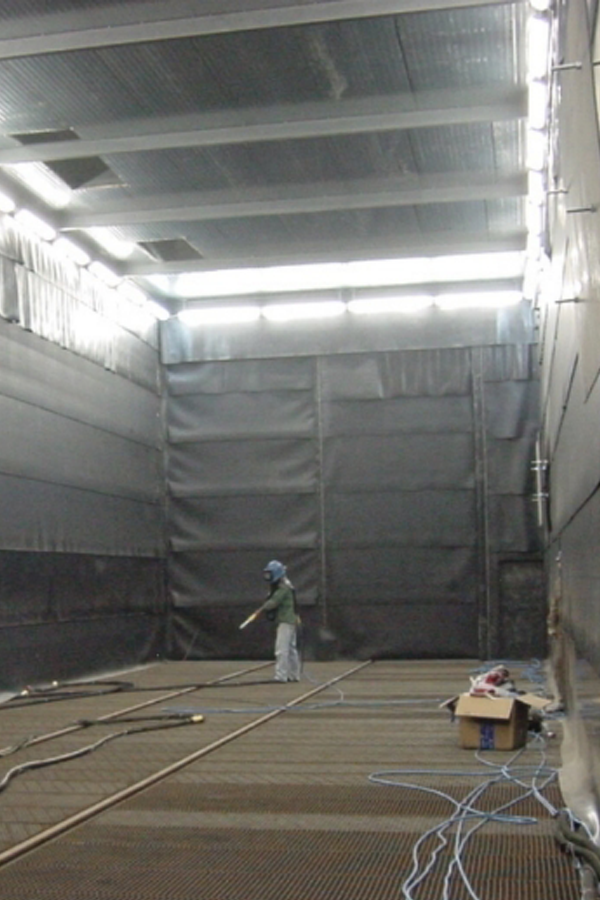
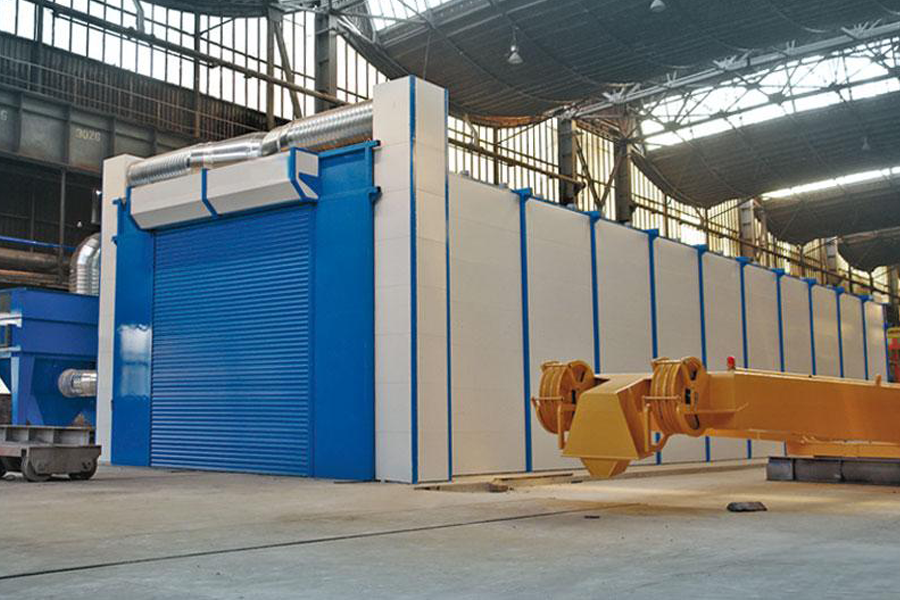
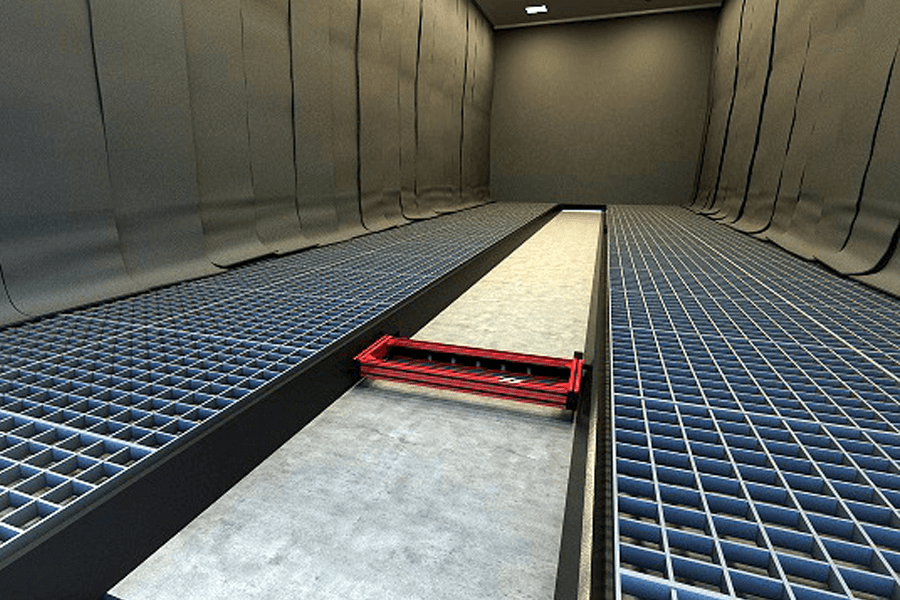
The sandblasting room is designed as 15 metres in length, 6 metres in width, and 6 metres in height.
For pipes requiring manual touch-up blasting or for specialised coatings that demand specific surface roughness profiles, the room is also equipped with 4 pressure blast pots, each with a 1 cubic metre capacity. These pots supply hand-held blast nozzles via a manifold system, allowing operators to access areas that may not be fully covered by the automated turbine system, such as pipe ends, bevels, and internal weld zones.
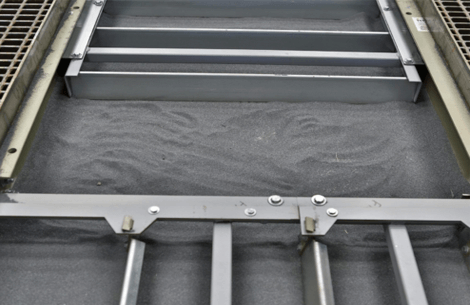
The abrasive recovery system is engineered for continuous, high-volume operation. A series of 10 screw conveyors in the floor pit collect the spent abrasive and transport it to a bucket elevator, which feeds a multi-stage cleaning unit. The cleaning unit features a multi-deck vibrating screen for size classification, an intensive magnetic separator for ferrous contaminant removal, and an adjustable air-wash separator for dust extraction. The cleaned steel grit is stored in a 10-tonne hopper with dual-level sensors for automatic refill control. The system’s design capacity is 50 tonnes of abrasive per hour, ensuring uninterrupted operation even during peak production periods.
A critical aspect of the installation is the dust collection and air quality management system. The dust collector is a pulse-jet cartridge unit with 1,000 square metres of filtration area, powered by a 55 kW fan. The system maintains the dust concentration inside the room below 1.5 milligrams per cubic metre, well below the OSHA Permissible Exposure Limit (PEL) of 5 milligrams per cubic metre for respirable crystalline silica. Additionally, a continuous monitoring system, consisting of 8 real-time dust sensors positioned throughout the room, provides instant alerts if dust levels approach the alarm threshold.
Since its commissioning in June 2025, the sandblasting room has processed over 120 kilometres of pipeline. The automated turbine system has reduced the blasting time per 12-metre pipe joint from 15 minutes (with manual blasting) to 3 minutes, a remarkable 80 percent reduction. The surface roughness profile, consistently measured at 50 to 75 micrometres, has been certified by NACE International (now AMPP) inspectors as meeting the requirements of all major coating specifications, including NACE No. 2/SSPC-SP 10 (Near-White Metal Blast Cleaning).
Need advice?
Need advice? Call or WhatsApp us, and you’ll get a reply within 5 minutes!
- (86)-0532-88136558
- (86)13589238091
- disa@disachina.com