
Internal Wall Sandblasting Treatment for Precision Hydraulic Cylinder Tubes in Yangzhou
Engineered a custom dry-blasting workstation for a Yangzhou OEM, replacing a slow, environmentally hazardous pickling/honing process.
An engineering machinery OEM in Yangzhou manufactures hydraulic cylinders for excavators and cranes, requiring surface pretreatment for seamless steel tubes with inner diameters ranging from 25 to 80 mm and lengths up to 6 meters. The inner surface must achieve a consistent roughness of Ra 1.6–3.2 µm to ensure optimal seal performance and extend service life. The previous process—pickling followed by honing—was slow, costly, and generated acidic wastewater that violated the plant’s increasingly stringent discharge permits. Furthermore, the OEM’s Japanese hydraulic partner mandated that the inner wall cleanliness fully comply with ISO 8501-1 Sa 2½ standards, with absolutely no residual mill scale.
Solution
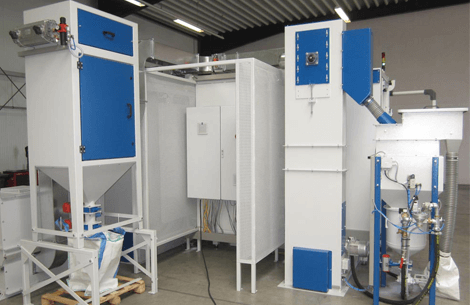
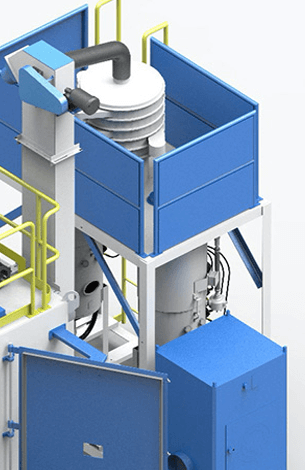
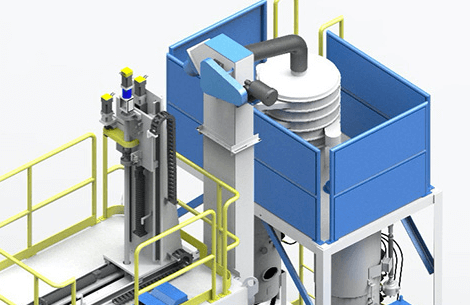
We engineered a dedicated small-bore internal wall sandblasting workstation. The system’s core is a servo-driven, flexible blasting lance carrier that travels along precision linear guideways at a programmable feed rate of 0.2 to 4.0 m/min, achieving a positioning accuracy of ±0.05 mm/m. The lance features a radial micro-nozzle head equipped with two WC-Co cemented carbide nozzles, angled at 35° to the lance axis. These nozzles propel S170 steel grit at 0.45 MPa onto the rotating tube wall. The steel tube rotates at 8 to 24 rpm on rubber-lined V-rollers while the lance traverses its length; the overlapping blast patterns guarantee uniform coverage in a single pass, regardless of the tube diameter.
Abrasive Recovery & Surface Control
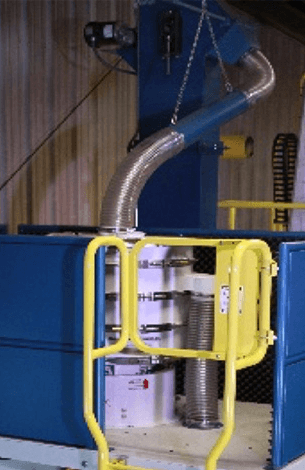
A dual-stage cyclone separator, paired with a self-cleaning pressurized feed system, recovers abrasive with 99.2% efficiency, returning only correctly sized particles to the blast hopper. An inline surface roughness probe measures the Ra value immediately after each tube is blasted; if the reading falls outside the 1.6–3.2 µm tolerance window, the system automatically re-blasts the affected section. A fully closed-loop pressure control system maintains blasting pressure deviation within ±0.5%, completely eliminating the uneven etching issues that plagued the legacy honing process.
Results
This workstation replaced the pickling and honing steps with a single dry process, reducing the cycle time for a 6-meter tube to just 7 minutes. Ra consistency improved dramatically from ±0.8 µm to ±0.15 µm, leading to a 35% increase in seal service life during bench testing and the complete elimination of acidic wastewater discharge. The Japanese partner approved the process after just a single on-site audit, and the workstation has operated continuously on a three-shift basis for 18 months without any unplanned downtime.
Need advice?
Need advice? Call or WhatsApp us, and you’ll get a reply within 5 minutes!
- (86)-0532-88136558
- (86)13589238091
- disa@disachina.com