
Shotblasting Room for Locomotive Refurbishment at German Rail Depot
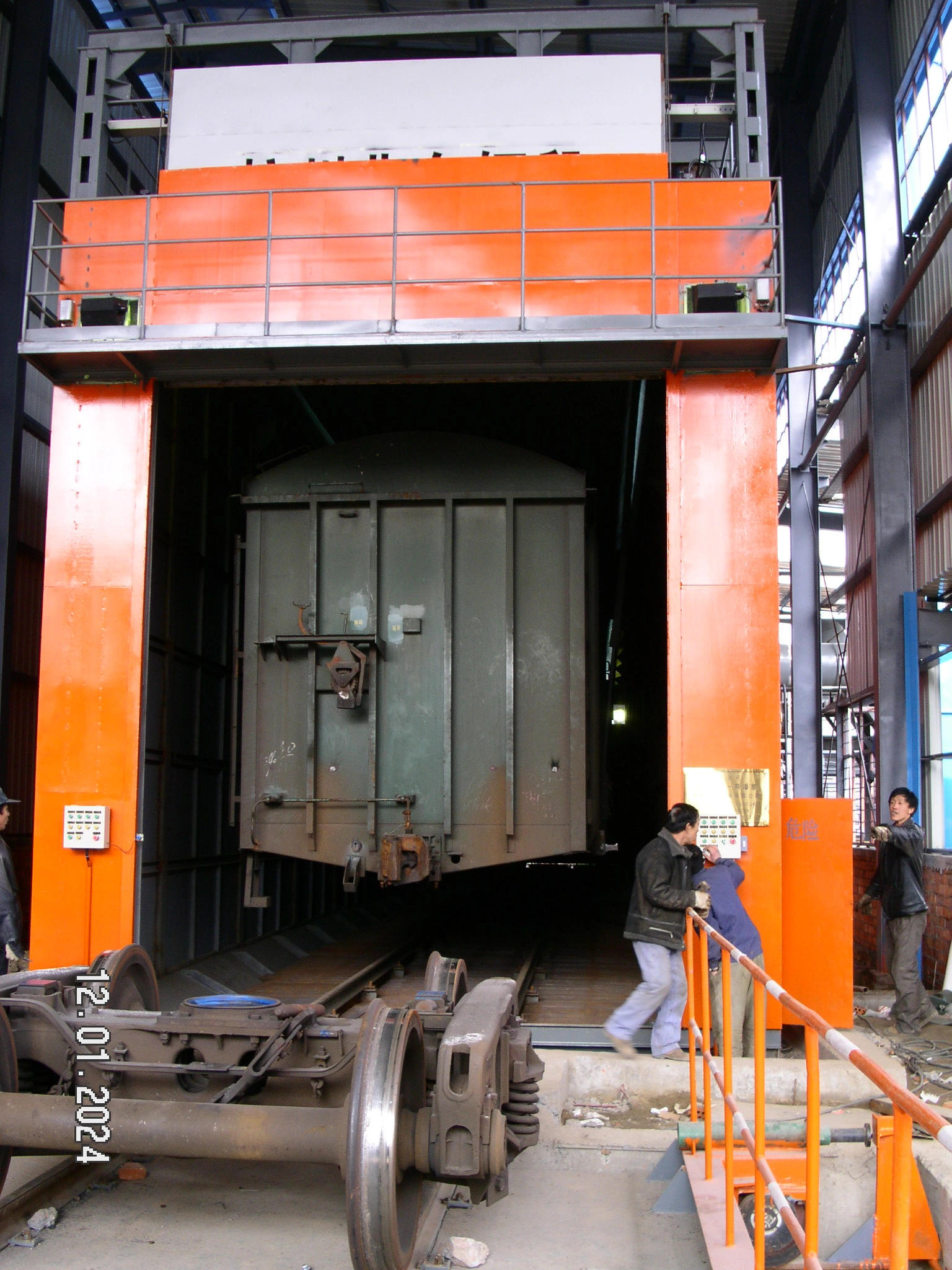
Our distinguished customer from southern Germany specializes in locomotive refurbishment. They have purchased a shotblasting room for their brand‑new production workshop, with the following dimensions: 40 m long × 7 m wide × 6.5 m high.
The refurbishment of railway locomotives and rolling stock requires meticulous surface preparation to ensure the longevity of protective coatings in one of the most demanding operational environments. This case study describes the installation of a specialised sandblasting room at a Deutsche Bahn maintenance depot in Munich, Germany, designed specifically for the treatment of locomotive bodies and rail car components.
The maintenance depot, one of Deutsche Bahn’s largest facilities, is responsible for the scheduled refurbishment of electric and diesel locomotives, including the complete stripping of old paint and rust from locomotive bodies before recoating. The depot’s previous surface preparation method, which relied on hand-held grinders and needle guns, was labour-intensive, slow, and unable to achieve the consistent SA 2.5 surface finish required by the latest European railway coating standards (EN 1504-2). After a comprehensive feasibility study, the decision was made to invest in a purpose-built sandblasting room.
Project Details
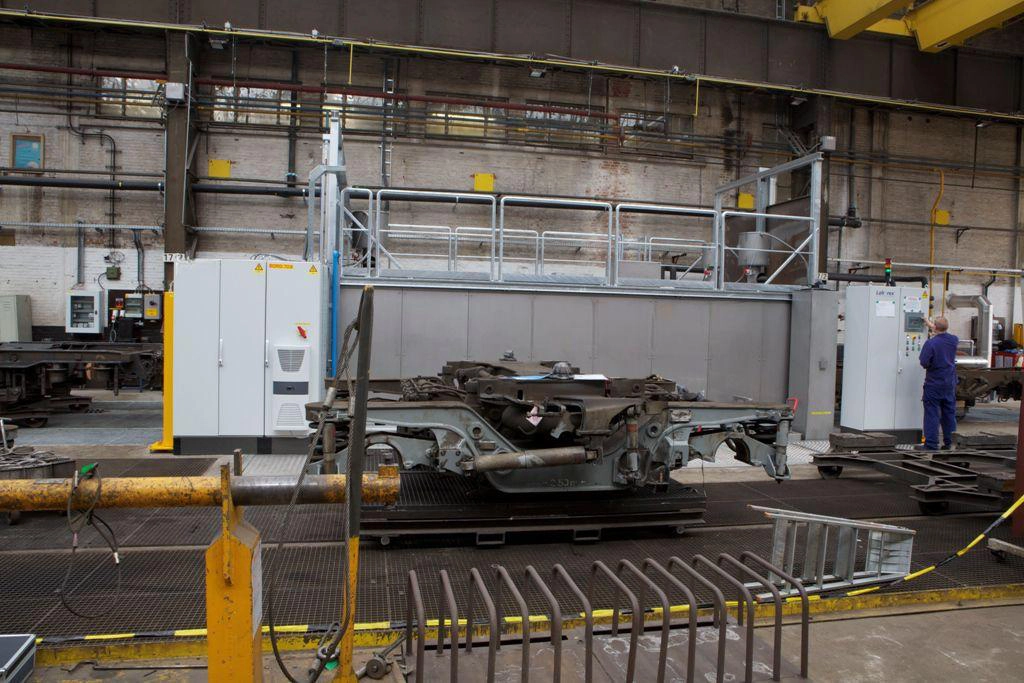
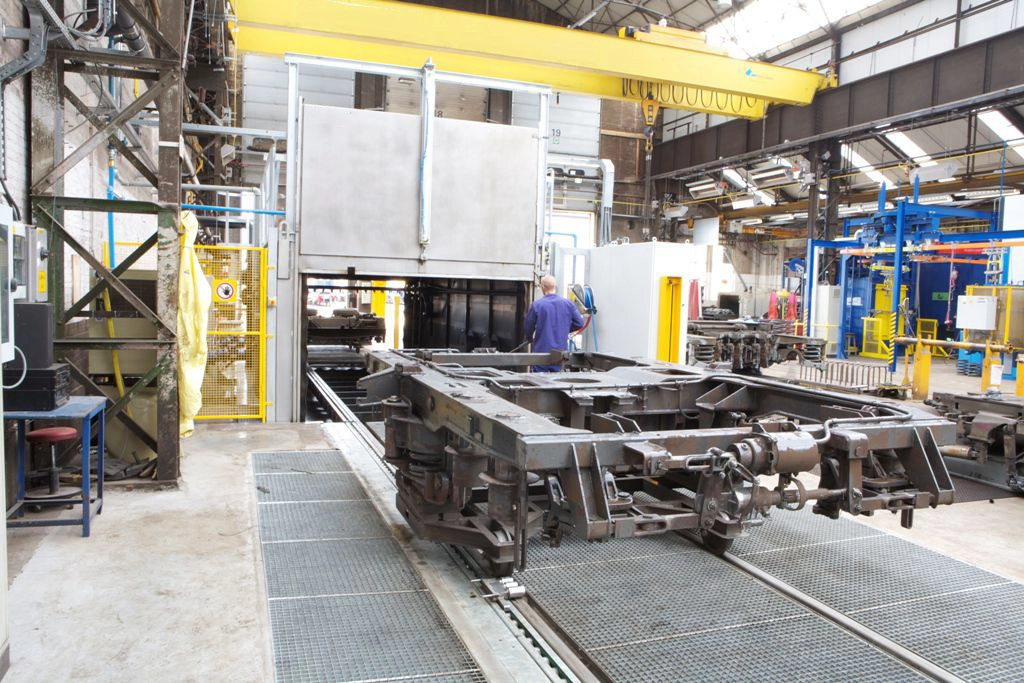
The sandblasting room is a tunnel-type design, measuring 40 metres in length, 7 metres in width, and 6.5 metres in height. The extended length accommodates a full-size electric locomotive, which typically measures 20 metres in length. The room is served by a rail track embedded in the floor, allowing locomotives to be shunted directly into the blasting area by a battery-powered shunting locomotive. A 10-tonne overhead crane runs the full length of the room for handling detached components such as bogies, doors, and roof panels.
The interior of the room is lined with 50 mm thick rubber mats, mounted on a modular steel frame, which can be individually replaced when worn. This rubber lining system serves a dual purpose: it protects the structural walls from abrasive impact, and it significantly reduces the noise level inside the room, which is particularly important given Germany’s strict workplace noise regulations (the maximum permissible daily noise exposure is 85 dB). The rubber-lined room achieves an internal noise level of 98 dB during blasting, compared to 112 dB in an unlined steel room.
The abrasive recovery system is designed for steel grit, the preferred abrasive for railway applications due to its high cleaning efficiency and recyclability. A floor-mounted slat conveyor system, combined with a bucket elevator, transports the used abrasive to a cleaning unit comprising a vibrating screen, a magnetic separator, and an air-wash classifier. The cleaned abrasive is stored in a 3-tonne hopper equipped with load cells for real-time inventory monitoring. The system achieves an abrasive recycling rate of over 98 percent, a critical factor given the high cost of premium-grade steel grit.
Two pressure blast pots, each with a 0.8 cubic metre capacity, supply abrasive to 4 blast nozzles via a manifold system that allows the operator to select between single-nozzle and dual-nozzle operation modes. The nozzles are fitted with boron carbide liners, offering a service life of approximately 1,200 hours, significantly longer than the standard tungsten carbide alternative. Each operator station is equipped with a Clemco Apollo 600 climate-controlled blasting helmet, providing temperature-regulated breathing air and a wide-field visor with replaceable lenses.
The dust collection system features a reverse-pulse-jet cartridge dust collector with 450 square metres of filtration area, powered by a 30 kW fan. The system is designed to maintain a negative pressure inside the room, preventing dust from escaping through the entrance and exit openings. An innovative feature is the integration of a noise attenuator on the exhaust stack, reducing the external noise emission to below 65 dB at a distance of 10 metres, ensuring compliance with local residential noise ordinances.
Since its commissioning in September 2024, the sandblasting room has processed over 35 locomotive refurbishments. The depot reports that the time required for complete body stripping has been reduced from 5 days to 2 days per locomotive, representing a 60 percent improvement in productivity. The consistent SA 2.5 surface finish has resulted in a measurable improvement in the adhesion and durability of the subsequent epoxy and polyurethane coating system, extending the interval between major refurbishments from 8 years to 10 years.
Need advice?
Need advice? Call or WhatsApp us, and you’ll get a reply within 5 minutes!
- (86)-0532-88136558
- (86)13589238091
- disa@disachina.com