
What is a Sandblasting Machine? Your Guide to How It Works and Which One to Buy
A sandblasting machine is a high-efficiency surface treatment equipment that uses compressed air to propel abrasive particles at high speed, removing contaminants like rust, paint, and dirt. Widely used for industrial cleaning and surface preparation, it significantly improves efficiency while delivering an ideal finish for subsequent coating or processing.
1. Working Principle
The sandblasting machine employs a high-pressure airflow generated by an air compressor to draw or push abrasives from a storage tank or hopper through a hose to the blast gun. The abrasive particles are then ejected at extremely high velocity from the nozzle onto the workpiece. The intense impact rapidly strips away surface contaminants while achieving cleaning, texturing, or finishing effects without causing excessive damage to the substrate.
2. Core Features of a High-Quality Sandblasting Machine
A high-performance sandblasting machine must include the following key features to ensure efficiency, safety, and long-term reliability:
Uniform and stable abrasive flow with efficient dust collection: Ensures consistent blasting results and is equipped with effective dust extraction and ventilation systems to maintain a clean working environment.
Robust and durable materials: Constructed from high-strength, wear-resistant, and corrosion-resistant materials to significantly extend equipment service life.
Precise abrasive control valve: High-quality valves allow accurate adjustment of blasting intensity, effectively prevent clogging, support prolonged continuous operation, and substantially reduce consumption of compressed air and abrasives.
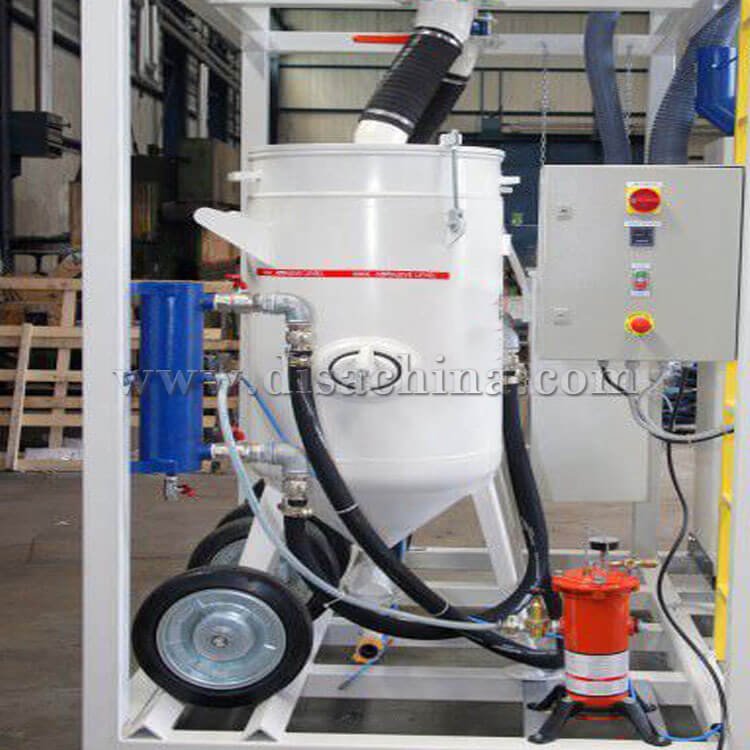
Efficient abrasive recycling system: Enables reuse of abrasives, minimizing waste and lowering operating costs.
Comprehensive safety protection: Integrates explosion-proof devices, pressure safeguards, and robust ventilation systems to protect operators and the environment.
Professional technical support: Backed by an expert team that provides personalized advice on abrasive and machine selection, technical support, and after-sales service to ensure complete customer satisfaction.
3. Common Types of Sandblasting Machines
Sandblasting machines are primarily classified by working principle and operation method as follows:
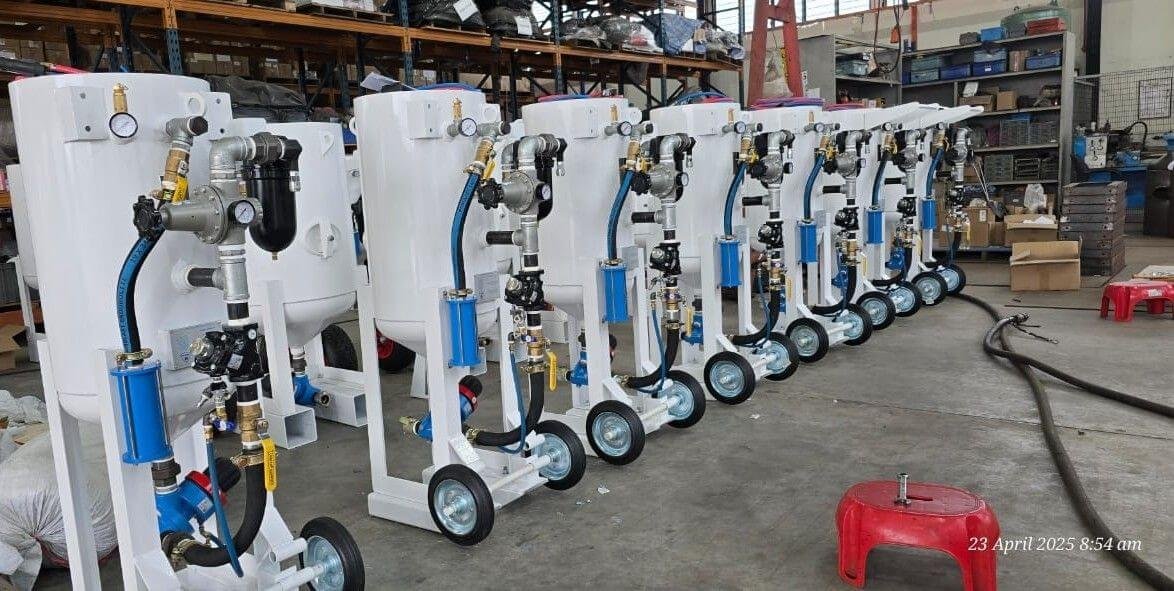
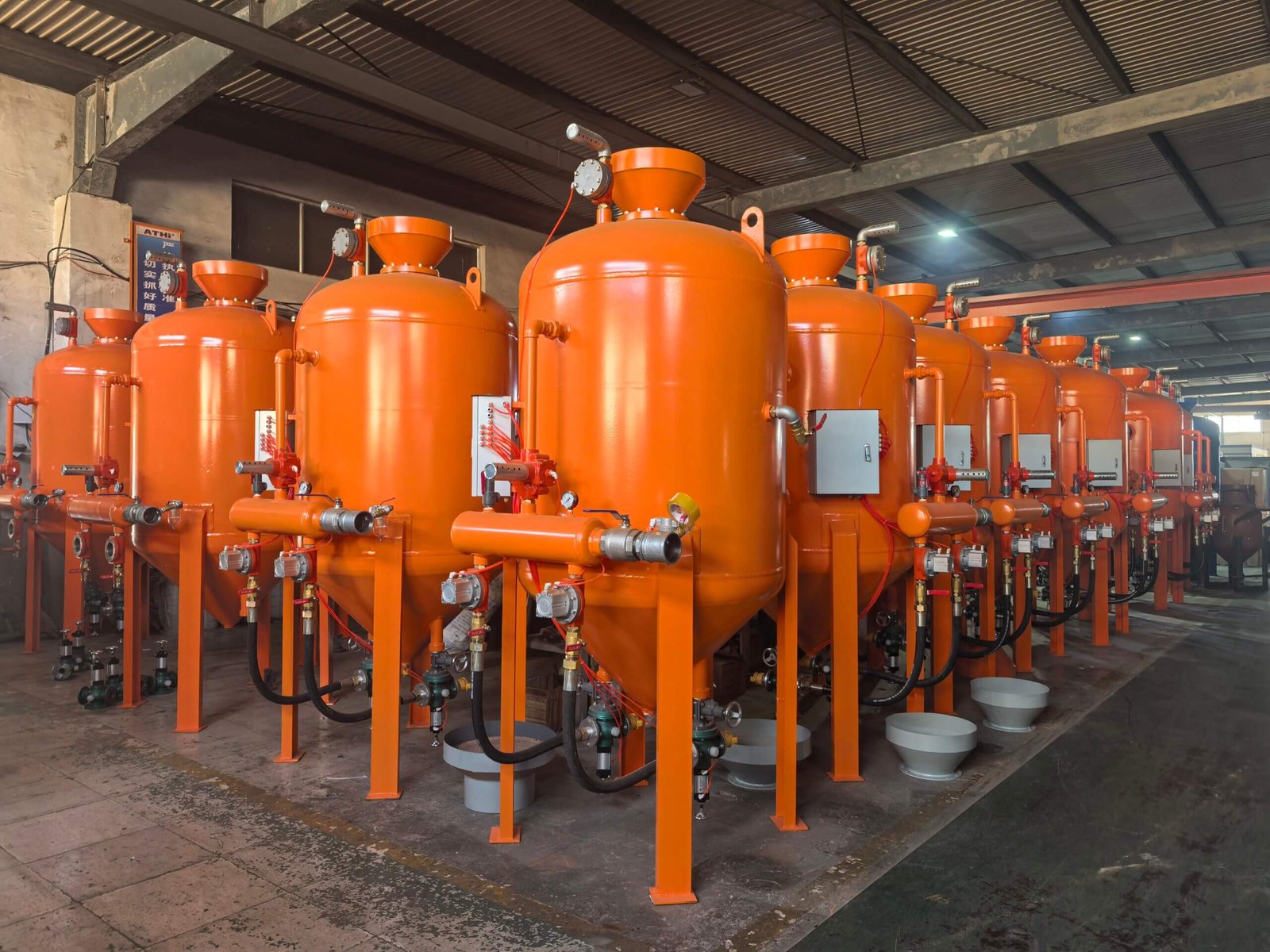
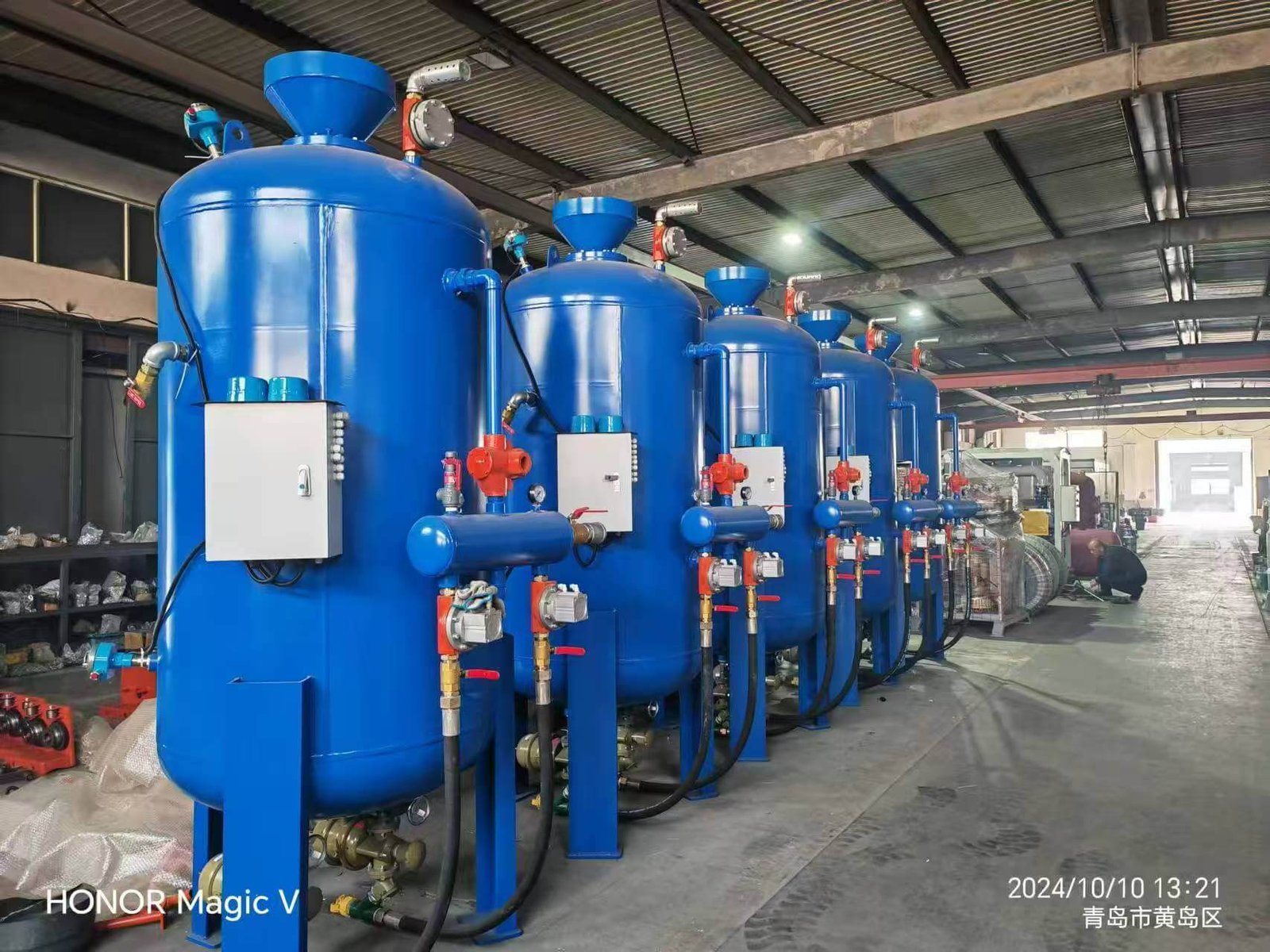
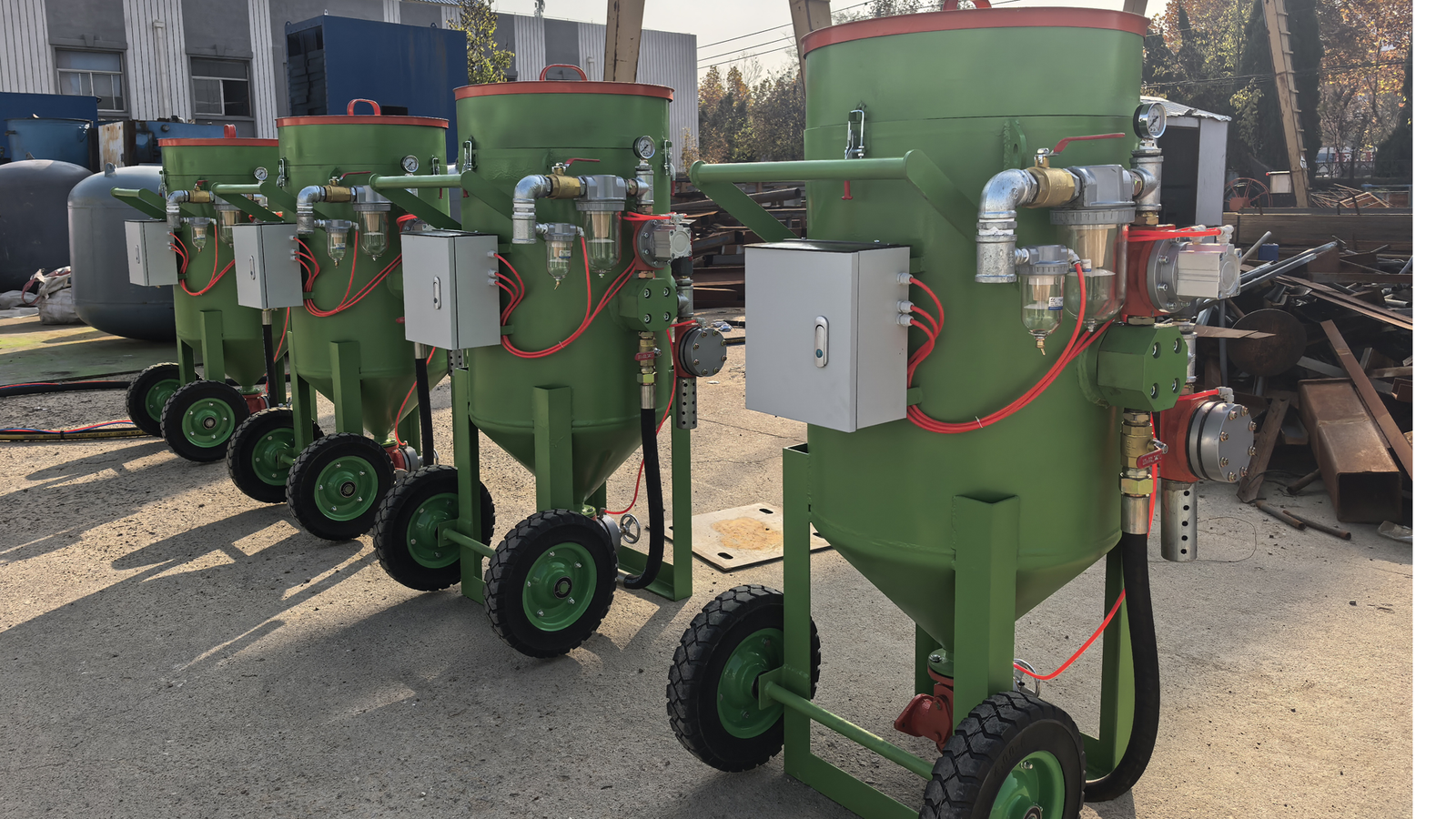
Pressure sandblasting machines: Use high pressure to forcefully eject abrasives, delivering strong blasting power and high efficiency. They are ideal for large-area, rapid cleaning and often feature portable designs.
Suction (siphon) sandblasting machines: Rely on the Venturi effect to draw abrasives into the airstream. They are simple in structure, flexible to operate, and suitable for small-to-medium surface treatments.
Wet sandblasting machines: Mix water with abrasives before spraying, effectively suppressing dust. They are preferred for environmentally sensitive or precision workpieces.
Tumbler sandblasting machines: Use a rotating drum for batch processing of small parts, ideal for high-volume automated blasting.
Automatic vs. Manual Sandblasting Machines:
Automatic sandblasting machines operate without human intervention and are used in large-scale, high-precision industrial production (e.g., aerospace, electronics manufacturing).
Manual sandblasting machines offer high flexibility and are suited for complex-shaped workpieces, small-batch jobs, and hard-to-reach areas. They are commonly used in automotive repair, building restoration, and antique restoration.
4. Main Application Areas
Sandblasting machines are highly versatile and can treat a wide range of materials including metal, wood, stone, glass, and plastics. Common applications include:
Surface preparation: Removes old paint and impurities to ensure excellent adhesion for new coatings.
Rust and corrosion removal: Efficiently eliminates rust and oxide layers from metal surfaces.
Surface cleaning: Clears industrial dirt, construction residue, and other pollutants.
Surface finishing and etching: Creates uniform textures, matte, or satin effects for decorative or functional purposes.
Part repair and refurbishment: Removes manufacturing marks, deburrs parts, and achieves high-quality finishes.
5. Common Industries
Sandblasting technology serves numerous critical sectors, including:
Automotive manufacturing and repair
Construction and infrastructure
Aerospace
Shipbuilding and marine engineering
Machinery manufacturing and foundry
Power, energy, and mining
Glass processing and art restoration
6. Common Abrasives and Selection Tips
The choice of abrasive directly affects treatment results and workpiece surface quality. Selection should consider material type, hardness, environmental requirements, and cost. Common abrasives include:
Aluminum oxide (corundum): Extremely hard and durable; ideal for fast rust and paint removal on metals.
Steel shot/grit: High impact strength; mainly used for heavy-duty rust removal and surface strengthening on metals.
Glass beads: Gentle on substrates; excellent for cleaning, polishing, and precision finishing.
Silica sand: Cost-effective with strong rust-removal capability, but generates hazardous dust—use with strict protective measures.
Sodium bicarbonate (baking soda): Very mild; suitable for delicate cleaning and removal of organic contaminants.
Specialty abrasives: Such as walnut shells, ceramic beads, or plastic media, chosen for sensitive materials or specific requirements.
Summary and Selection Advice
Sandblasting machines dramatically boost production efficiency and reduce overall costs through powerful surface treatment capabilities. When selecting equipment, consider workpiece material, treatment area, production scale, and environmental requirements. Prioritize machines with stable performance, comprehensive safety features, and professional after-sales support. Always follow strict safety protocols and use appropriate personal protective equipment.
Need advice?
Need advice? Call or WhatsApp us, and you’ll get a reply within 5 minutes!
- (86)-0532-88136558
- (86)13589238091
- disa@disachina.com