
- View Products
- Blasting pots
- Blasting cabinets
- Suction blasting cabinets
- Pressure blasting cabinets
- Blasting machine with rotary basket
- Turntable blasting machine
- Throughput blasting machine
- Roller conveyor blasting machine
- Internal blasting machine
- Multi-nozzle blasting machine
- Satellite table machine
- Blasting installation with sliding door
- Robotic blasting machine
- Precision spotblaster
- Shot blasting room
- Shot blasting container
- Automated shot peening machines
- shot blasting equipment
- wheelblasting machines
- Spinner hanger
- Tumble belt shot blasting machine
- Rotary table blast machine
- Roller conveyor wheelblasting machine
- Overhead monorail conveyor shot blasting machine
- Turn table
- Bogie table work car shot blasting machine
- Continuous tumblast machine
- preservation line
- Stone and brick shot blasting machine
- Anchor chain shot blasting machine
- Steel pipe shot blasting machine
- Gas cylinder shot blasting machine
- Drum type wheelblasting machine
- Mobile concrete floor shot blasters
- Wire mesh conveyor wheelblasting machine
- gas cylinder shot blasting machine
- disa blasting wheels
- Blasting media
- wheelblasting machines
- Blasting media
- Dust collectors
- Dehumidifiers
- Blasting with compressed air
- Suction units
- Blastwizard Blast Helmets
- References
- Blasting Knowledge
- Internal Pipe Shot Peening System
- Gas cylinder inside blasting machine
Need advice?
Need advice? Call or WhatsApp us, and you’ll get a reply within 5 minutes!
- (86)-0532-012345678
- 15112345678
- disa@disachina.com
Get in touch
Leave your details below and one of our specialists will be in touch as soon as possible.
Shotblasting chamber wall protection
To improve the service life of the shotblasting chamber Wall , 8mm thick wear-resistant rubber plates、Mndteel plate are pasted inside the room body.
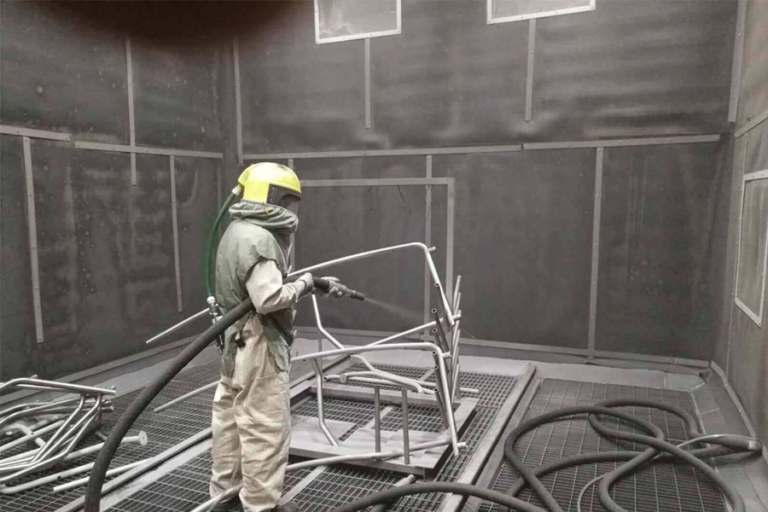
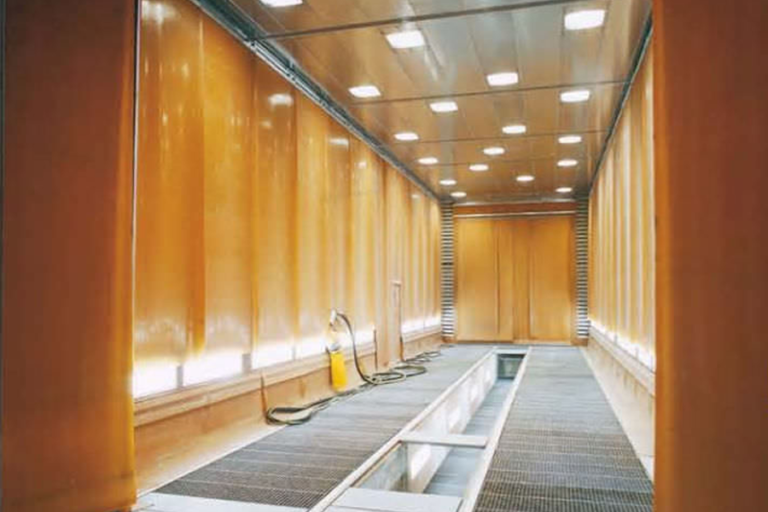
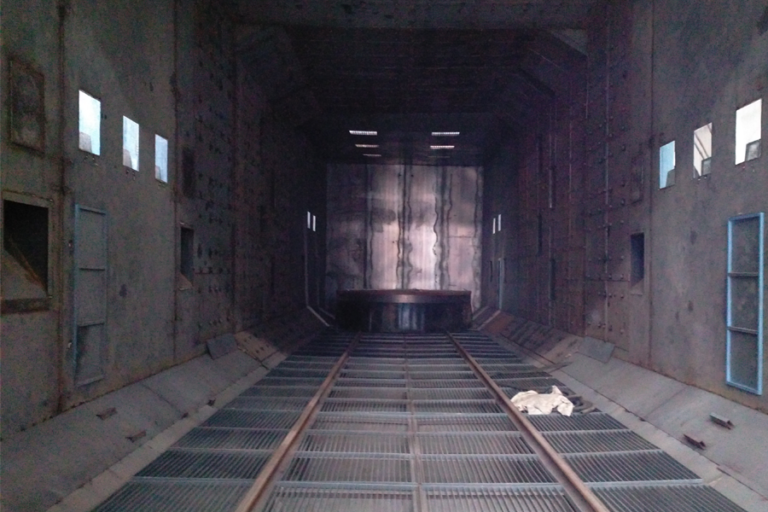
Rubber lining protection is available to protect the integrity of interior walls and doors for long-lasting life. Rubber blast room liners are often used to line the blast room walls in order to provide protection for the wall panels as well as for noise reduction. Our exclusive rubber lining design makes it easy to install and replace the rubber sheet as the room ages.
The technical parameters of the rubber plate are: hardness 38 IRHD, tensile strength 26.6 MPa, elongation 81%, tear strength 83%, abrasion index (wet) 108, temperature range -4 – 70℃.
Installation of Rubber Protective Layers
Batten Fixing Method: First, install a section steel framework on the inner wall of the sandblasting chamber, then lay the rubber sheets on the framework, and use battens to press and fix the rubber sheets on the framework. The battens are usually made of metal materials, such as angle steel or channel steel, and are connected to the framework by bolts or welding. Adjacent rubber sheets are arranged in an overlapping manner, with the overlapping width generally being 50-100mm to ensure that sand particles do not leak from the gaps.
Adhesive Method: Use a special rubber adhesive to directly paste the rubber sheets on the inner wall of the sandblasting chamber. This method is suitable for small sandblasting chambers or occasions with high requirements for the tightness of the protective layer. Before pasting, the wall surface of the chamber needs to be cleaned to ensure it is flat, dry, free of oil and dust, so as to guarantee the bonding effect of the adhesive.
Hanging Method: For some large sandblasting chambers, the hanging method can be used to install the rubber protective layers. First, install hanging devices, such as hooks or chains, on the top of the chamber, then hang the rubber sheets on the hanging devices through hooks or rings. The bottom of the rubber sheets can be fixed by counterweights or fixing devices to prevent the rubber sheets from shaking during the sandblasting process.
Polyurethane has good wear resistance, oil resistance and chemical corrosion resistance, and can resist the wear of sand particles during sandblasting as well as the erosion of oil stains and chemical substances that may be encountered. At the same time, it also has a certain degree of elasticity, which can better buffer the impact of sand particles.
A system of heavy-duty steel plates and fixing cover slats for absolute protection of sidewalls against abrasion. Options in height.
The housing of the blasting chamber exists out of 2 layers of steel: the main housing is made out of 8 mm mild steel, the inside of the blasting cabinet has an 8 mm manganese steel lining, All layers are bolted from the outside, so they are easy to replace.
Benefits
• Modular solution
• Easy replacement
• Direct connection to floor conveyor belts