
- View Products
- Blasting pots
- Blasting cabinets
- Suction blasting cabinets
- Pressure blasting cabinets
- Blasting machine with rotary basket
- Turntable blasting machine
- Throughput blasting machine
- Roller conveyor blasting machine
- Internal blasting machine
- Multi-nozzle blasting machine
- Satellite table machine
- Blasting installation with sliding door
- Robotic blasting machine
- Precision spotblaster
- Shot blasting room
- Shot blasting container
- Automated shot peening machines
- shot blasting equipment
- wheelblasting machines
- Spinner hanger
- Tumble belt shot blasting machine
- Rotary table blast machine
- Roller conveyor wheelblasting machine
- Overhead monorail conveyor shot blasting machine
- Turn table
- Bogie table work car shot blasting machine
- Continuous tumblast machine
- preservation line
- Stone and brick shot blasting machine
- Anchor chain shot blasting machine
- Steel pipe shot blasting machine
- Gas cylinder shot blasting machine
- Drum type wheelblasting machine
- Mobile concrete floor shot blasters
- Wire mesh conveyor wheelblasting machine
- gas cylinder shot blasting machine
- disa blasting wheels
- Blasting media
- wheelblasting machines
- Blasting media
- Dust collectors
- Dehumidifiers
- Blasting with compressed air
- Suction units
- Blastwizard Blast Helmets
- References
- Blasting Knowledge
- Internal Pipe Shot Peening System
- Gas cylinder inside blasting machine
Need advice?
Need advice? Call or WhatsApp us, and you’ll get a reply within 5 minutes!
- (86)-0532-012345678
- 15112345678
- disa@disachina.com
Get in touch
Leave your details below and one of our specialists will be in touch as soon as possible.
Overhead monorail conveyor shot blasting machine
The overhead monorail conveyor shotblasting machines are designed for blasting welded constructions, beams, and profiles of different shapes and dimensions. They are especially suitable for shot blasting work pieces of larger lengths. They can operate individually with their own rail or be integrated into an existing transport system.
Shotblasting operation is strictly controlled: it activates only when a hanging basket is positioned opposite the turbines and automatically ceases if no basket is present. Additionally, the steel shot supply is automatically cut off once the preset duration on the operator panel expires.
Read through the following sections for more description:
Overview
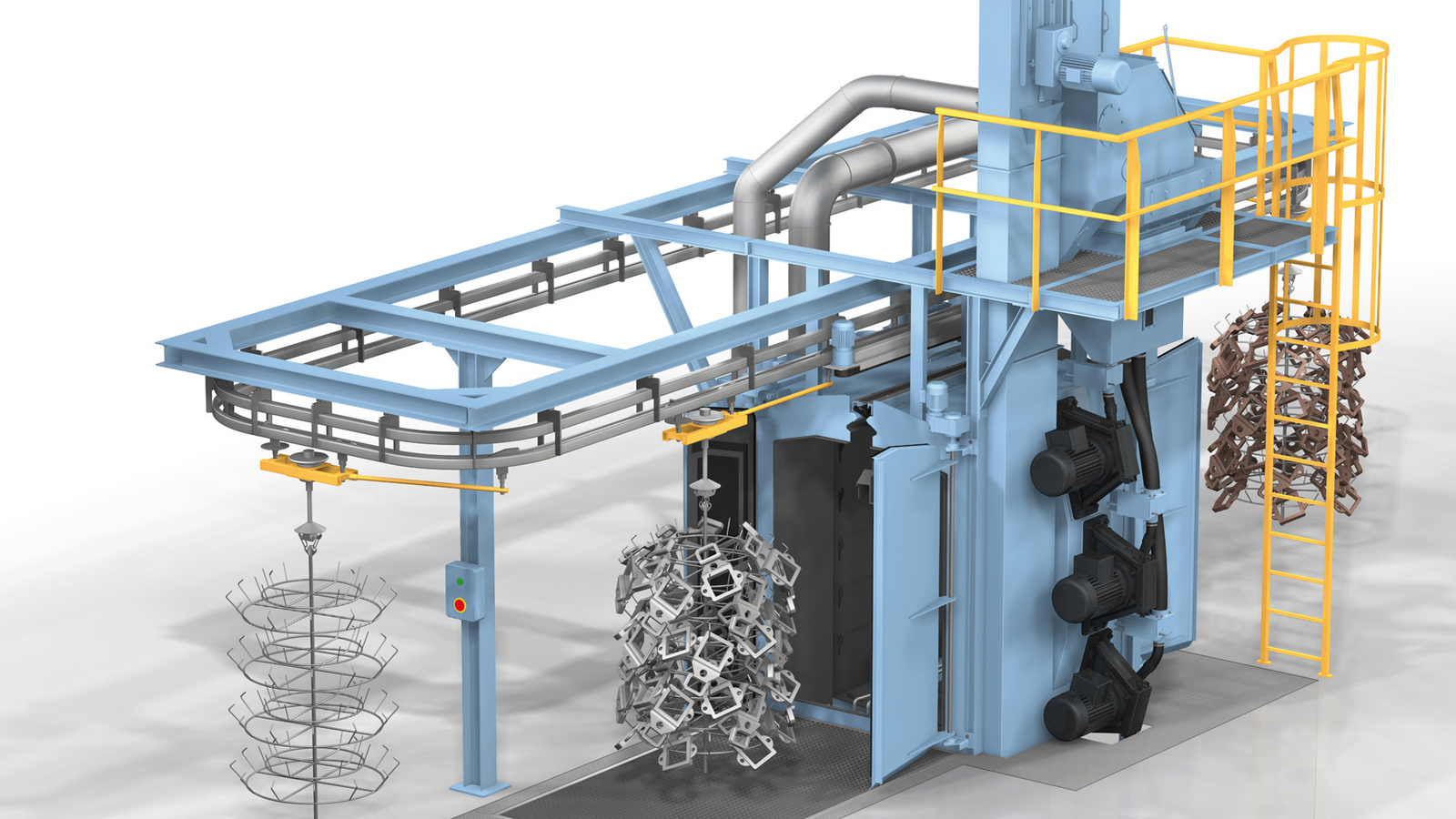
The continuous overhead monorail conveyor shot blast machine is designed such that when hanging baskets reach each sandblasting station, they stop precisely at the center of the station, rotate, and undergo sandblasting while stationary. By arranging parts on hanging baskets of specific dimensions, the machine is engineered to clean both indentations and protrusions on all surfaces of the parts, ensuring compliance with the SA 2.5 quality standard, while the layout of the turbines is meticulously designed to guarantee effective cleaning of even the most complex-shaped parts.
Parts of a standard spinner hanger blasting machine
1) Machine Construction
The shot blast machine’s construction is made of high-quality structural steel and Mn 12/14% manganese steel, sheets and profiles, suitably shaped and welded.
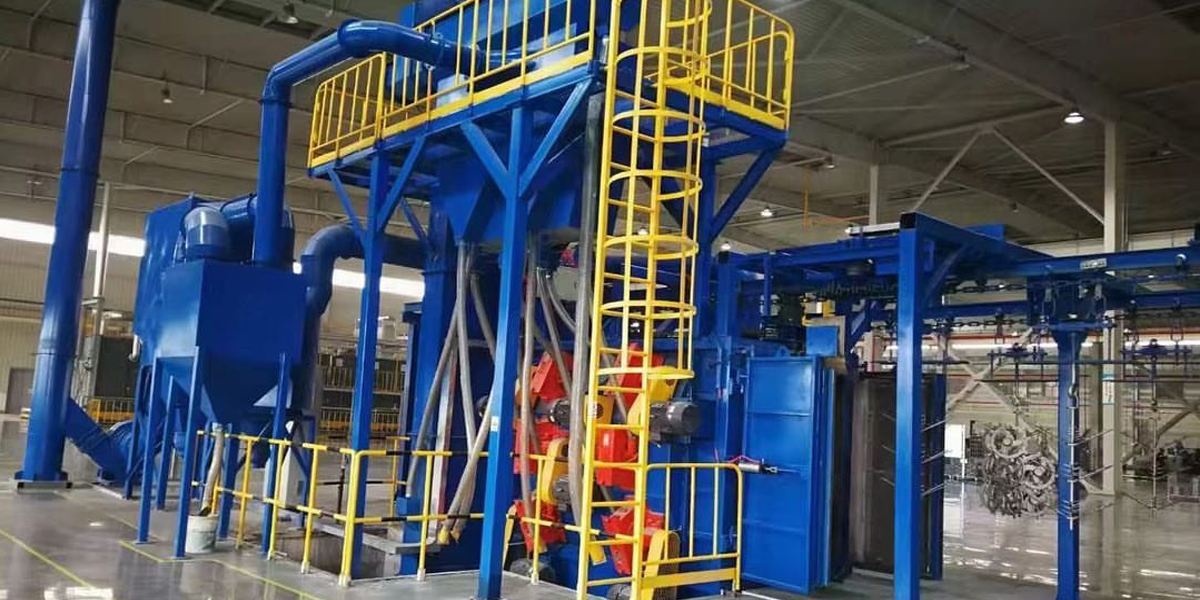
2)Blast turbine System
The turbine motor drives the bearing housing via a belt pulley system. To ensure durability in harsh environments, the turbine bearing housings utilize bearings with high vibration resistance, fully protected by a labyrinth seal and felt to prevent dust ingress. The sandblasting direction of the turbines is designed to be easily adjustable, and wear parts are configured for easy replacement.
Material specifications for the turbines are critical for longevity: the turbines are cast from special alloy materials with a hardness of 63–65 HRc to ensure high wear resistance. The protective armor for the turbine body is manufactured from high-manganese special armor steel.

3) Working Chamber
The station where the blast turbines are installed is fully covered with 6 mm thick, wear-resistant high-manganese special armor steel, a material characterized by its ability to harden upon impact. All welded areas are covered with strips of the same material. Areas opposite the turbines that are primarily exposed to wear are mounted via bolts and covered with high-manganese special armor steel with an additional thickness, resulting in a total thickness of 18 mm (6 mm base + 12 mm additional). These panels are designed to be easily removable and replaceable. Other secondary wear areas are similarly mounted via bolts but covered with high-manganese special armor steel with a different additional thickness, resulting in a total thickness of 14 mm (6 mm base + 8 mm additional), also ensuring they are easily removable and replaceable.

4)Mechanical labyrinth system
Hanger hooks are manufactured with special heat treatment to ensure wear resistance. The machine ceiling, covering both internal and external areas where the carrier hanger enters the machine, is equipped with a special mechanical labyrinth system made of wear-resistant high-manganese armor steel to prevent steel shot leakage. This design guarantees that 100% of the steel shots used for sandblasting remain contained within the machine.

5) Abrasive Recovery
Large particles, such as slag and burrs mixed into the steel shots during shotblasting, are separated using a vibratory conveyor. A magnetic separator is employed to separate sand mixed with steel shots, achieving 100% separation efficiency for dust and steel shots. Under the steel shot tank, each turbine is equipped with two independent valve systems: a separate mechanical valve and a magna valve. The mechanical valve is designed to allow the removal of the magna valve for maintenance or replacement without disrupting the entire system.
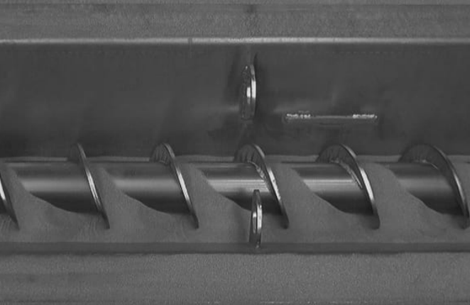
6)Paving Flooring
The floor is covered with wear-resistant support grids, partially made of manganese steel, which form the base for abrasion-resistant cast iron plates with holes. The flat floor also facilitates maintenance.
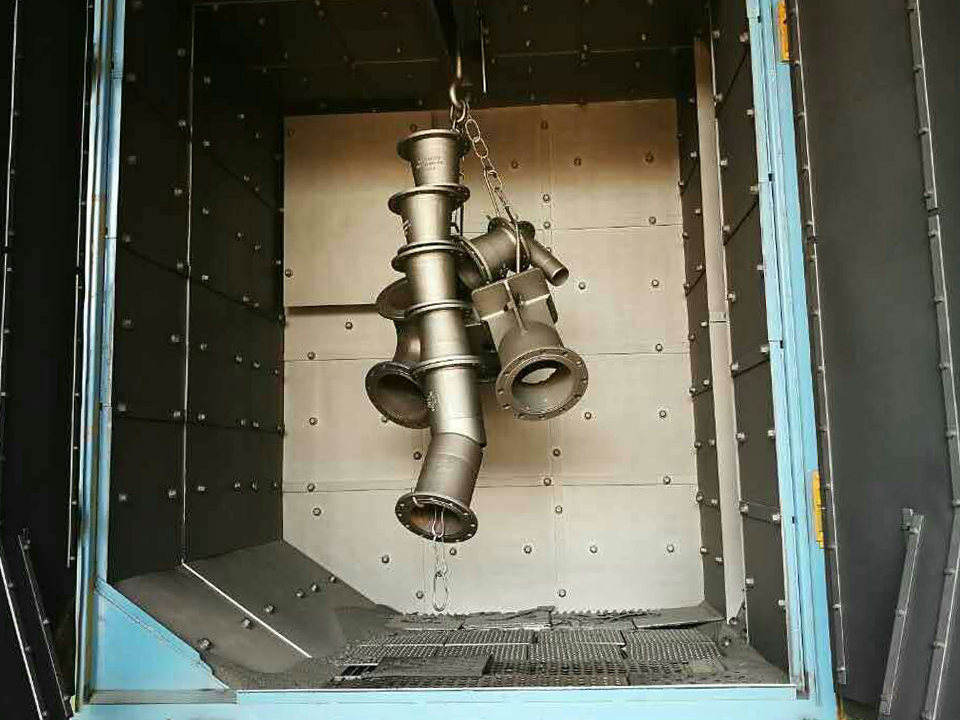
7) Bucket Conveyor
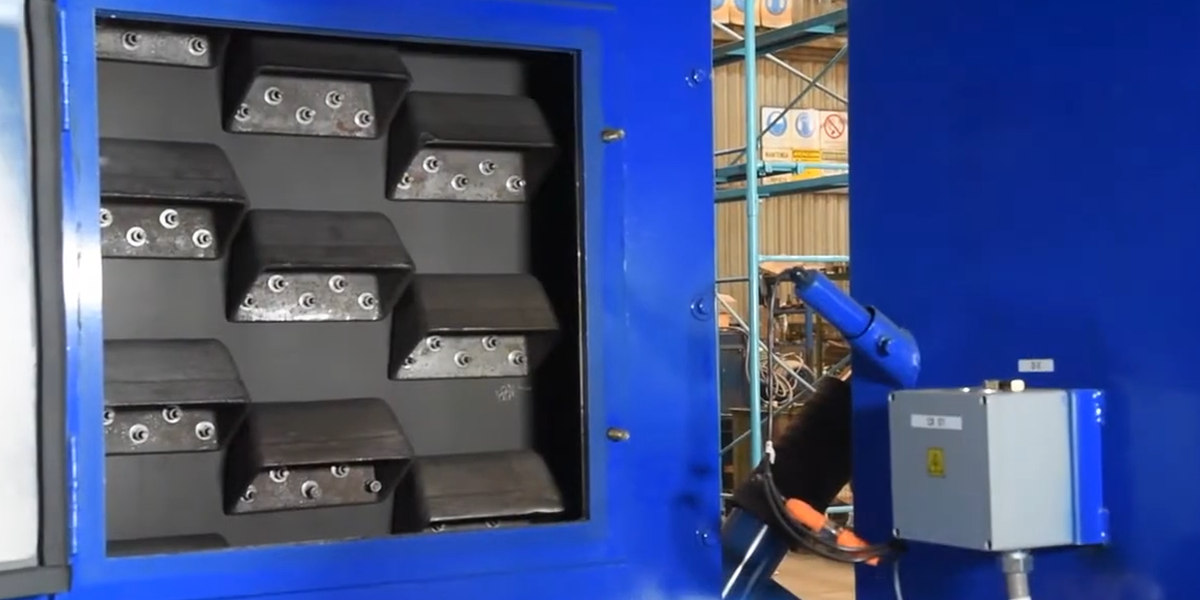
The DISA Belt and Bucket Elevator Recovery System is specifically designed to lift abrasive media from shot blasting machines to storage silos. The system consists of a series of buckets mounted on a conveyor belt, fully enclosed within a steel casing. All head sections are equipped with an adjustable discharge lip to ensure the smooth discharge of the shot blasting media.
The elevator features sensors to detect belt slippage or jamming, preventing shot accumulation and breakage by triggering an automatic, sequenced system shutdown. Additionally, the gearbox-mounted motor includes magnetic brakes that instantly engage upon stopping to prevent backward belt slippage caused by the load weight.
8) Abrasive Separator
The abrasive is transported by a bucket conveyor to the separator’s screw conveyor, which is equipped with a rotating screen to separate larger impurities from the abrasive. The abrasive is then moved to a pneumatic separator, which discharges the separated, crushed abrasive, dust, and impurities. The cleaned abrasive is collected in a hopper that feeds the turbines.click here.

9) Abrasive Valves
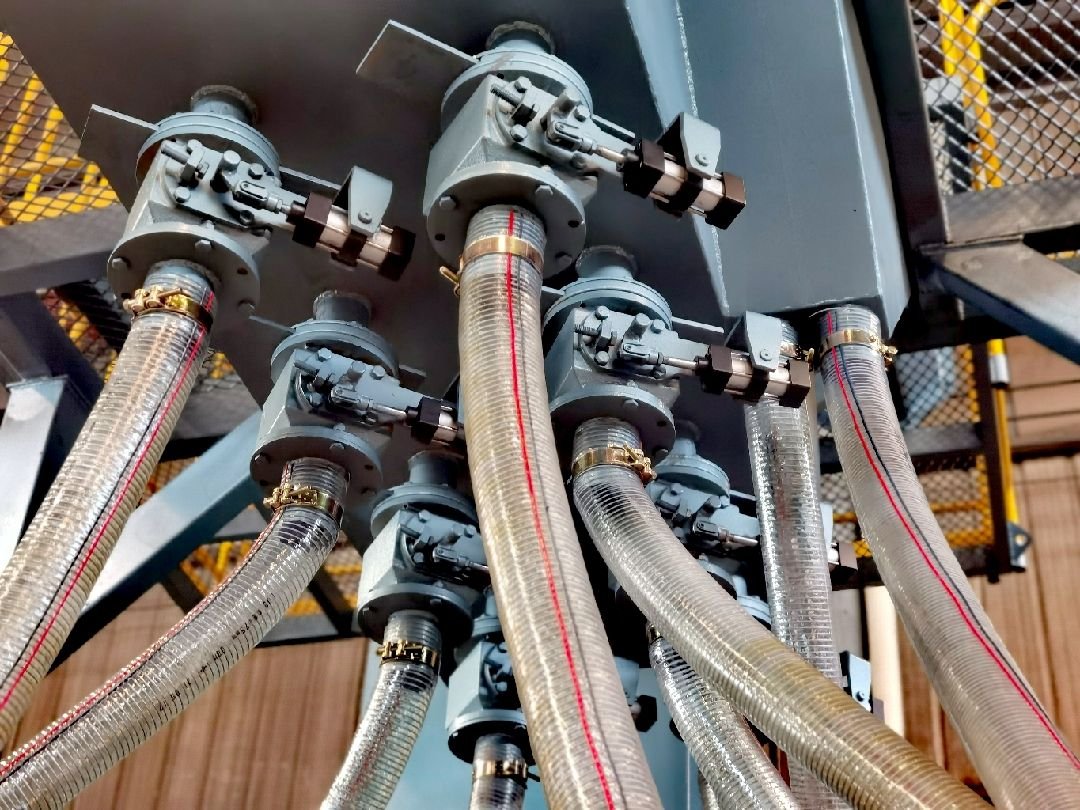
The DISA abrasive valve, also known as a pipe-clamping normally-closed valve, ensures precise and reliable media control. Activated by a compressed air signal via an electric switch, the valve overcomes a strong spring to open the flow path for blasting; when the signal ceases, the spring instantly closes the valve to stop the flow. This design allows for accurate, easy adjustment of abrasive flow rates for both steel grit and sand. As the durable core of the blasting system, the DISA valve effectively prevents blockages, maintains consistent blasting pressure without relief cycles, and significantly reduces compressed air and abrasive consumption while extending service life.
10)Overhead Conveyor
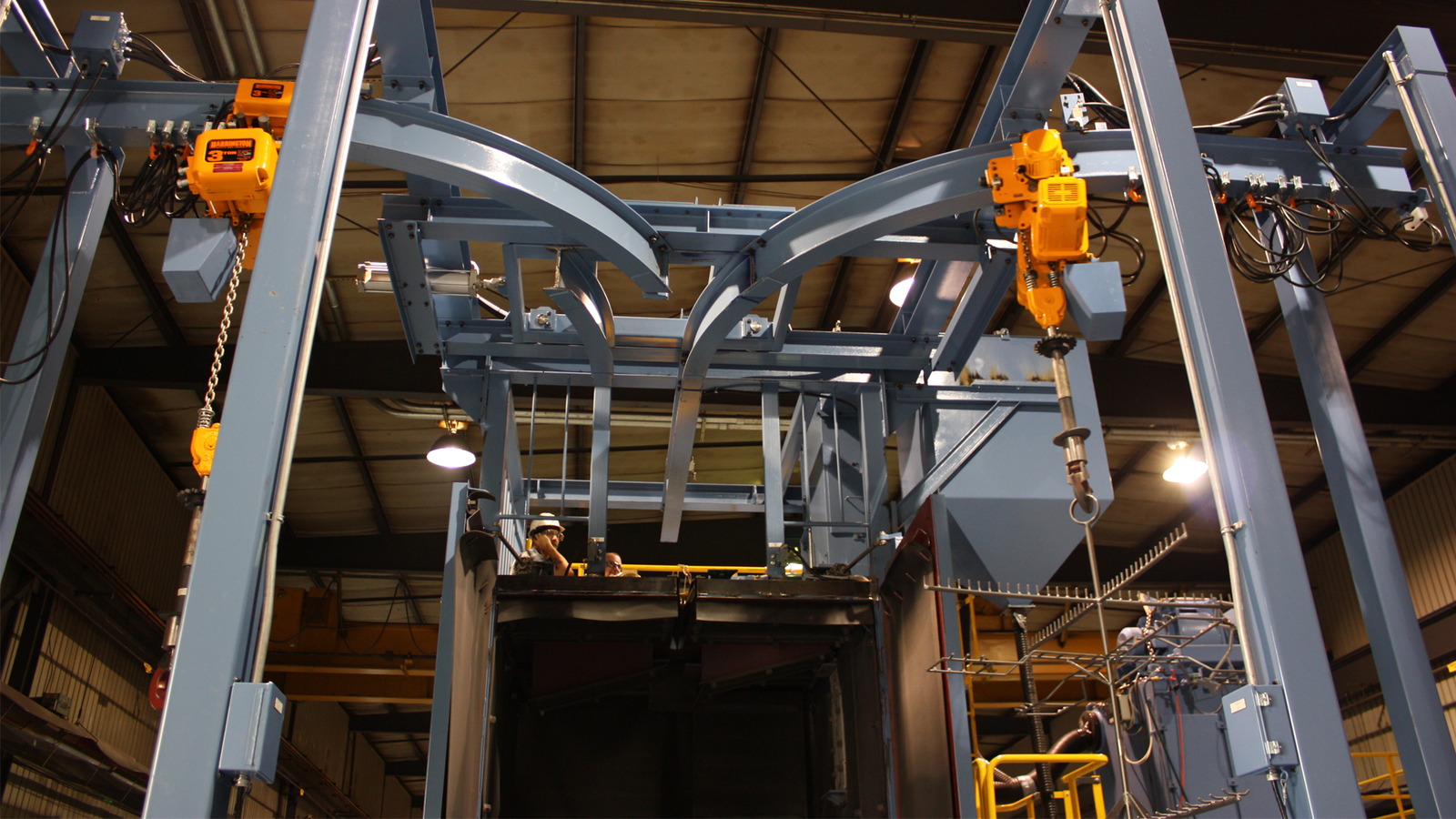
Based on two independent support profiles on which the trolleys move, a patented guide system uses a chain driven by a gear motor connected to an electric motor operating at two speeds and equipped with appropriate limit switches. The device allows for the insertion and removal of the hanger from the beginning to the very end of the turnout section (automatically) and movement during shot blasting inside the work cabin.
11) Dust collection system
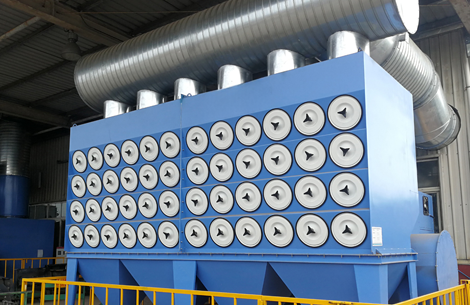
The dust collection system is easily controllable from the operator panel. The filters possess a structure and capacity that prevents dust leakage from any part of the machine and avoids collecting sandblasting steel shots during operation. Exhaust emission values at the chimney outlet comply with national environmental regulations. The filter system is operable both automatically and manually, independent of the main machine, and the filter cleaning system can be activated at any time. Cyclones are utilized in the dust collection system to reduce the load on the filters.
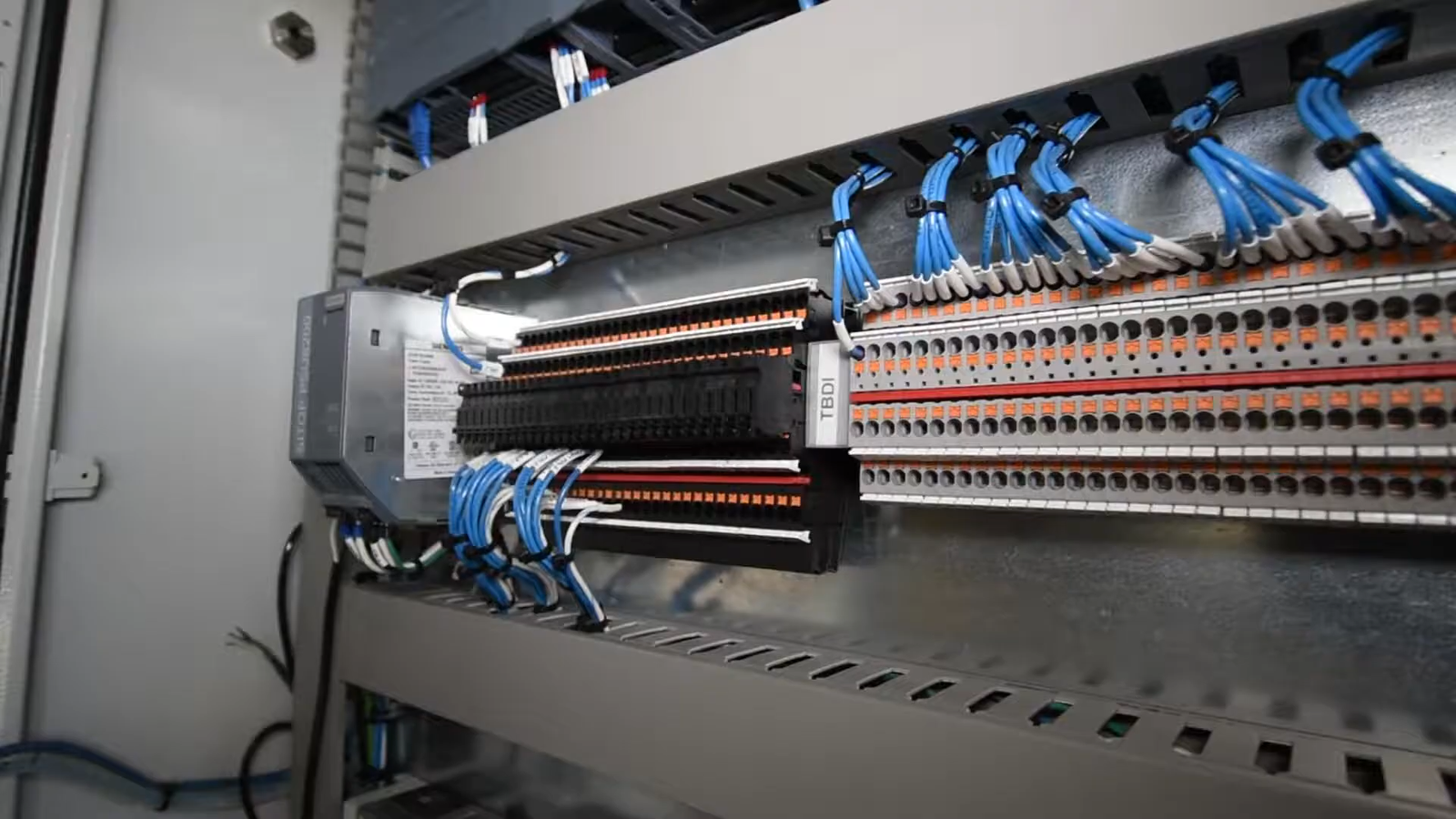
12)Electrical Control Systems
The electrical panel is manufactured with a fully enclosed, dust-proof labyrinth cover and painted with electrostatic powder coating. All electrical components are sourced from reputable brands such as Schneider, Siemens, or ABB Electric.
The control panel is equipped with safety devices to protect all electric motors in the system, including a circuit breaker, thermal relay, phase protection relay, contactor, energy monitoring unit, and a main switch locking mechanism. Additionally, the panel features a separate digital ammeter for each turbine to continuously monitor motor current and turbine sandblasting flow rate. If the turbine sandblasting flow rate drops below the set lower limit, a written warning is displayed on the PLC screen, indicating potential hose blockage or insufficient steel shots in the shot tank.
13)Optional:
The blast machines can receive a series of optional equipment, among which, the following stand out: coatings to operate with angular abrasive materials, vibrating screen, frequency inverter for the blast wheels, etc.


References
Over 40 years Disa has been providing bespoke solutions to clients worldwide. From valued individual clients to multinational companies, from single installations to complete inline solutions for large foundries and paint shops we offer a wide spectrum of solutions based on our clients needs. Feel free to browse through our reference sections for more details.