- View Products
- Blasting pots
- Blasting cabinets
- Suction blasting cabinets
- Pressure blasting cabinets
- Blasting machine with rotary basket
- Turntable blasting machine
- Throughput blasting machine
- Roller conveyor blasting machine
- Internal blasting machine
- Multi-nozzle blasting machine
- Satellite table machine
- Blasting installation with sliding door
- Robotic blasting machine
- Precision spotblaster
- Shot blasting room
- Shot blasting container
- Automated shot peening machines
- shot blasting equipment
- wheelblasting machines
- Spinner hanger
- Tumble belt shot blasting machine
- Rotary table blast machine
- Roller conveyor wheelblasting machine
- Overhead monorail conveyor shot blasting machine
- Turn table
- Bogie table work car shot blasting machine
- Continuous tumblast machine
- preservation line
- Stone and brick shot blasting machine
- Anchor chain shot blasting machine
- Steel pipe shot blasting machine
- Gas cylinder shot blasting machine
- Drum type wheelblasting machine
- Mobile concrete floor shot blasters
- Wire mesh conveyor wheelblasting machine
- gas cylinder shot blasting machine
- disa blasting wheels
- Blasting media
- wheelblasting machines
- Blasting media
- Dust collectors
- Dehumidifiers
- Blasting with compressed air
- Suction units
- Blastwizard Blast Helmets
- References
- Blasting Knowledge
- Internal Pipe Shot Peening System
- Gas cylinder inside blasting machine
Need advice?
Need advice? Call or WhatsApp us, and you’ll get a reply within 5 minutes!
- (86)-0532-012345678
- 15112345678
- disa@disachina.com
Get in touch
Leave your details below and one of our specialists will be in touch as soon as possible.
Wire mesh conveyor wheelblasting machine
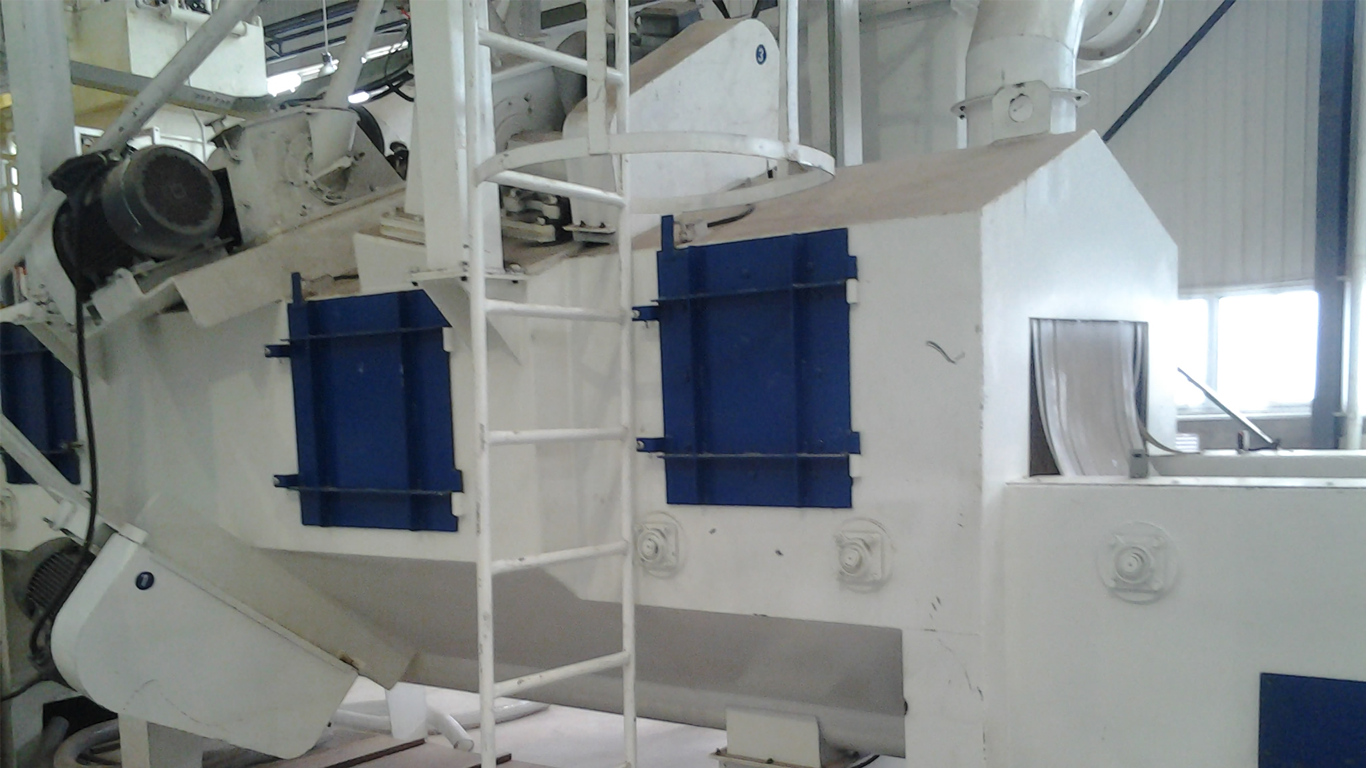
Disa wire mesh belt conveyor shot blasting machine is designed for foundry castings and similar components, delivering high-performance cleaning for small to medium-sized workpieces.
Blast System Composition
The blast machine comprises automatic loading and unloading stations, offload conveyors, and a PLC-controlled shot blasting system with part memory functionality. The continuous conveyor system enables 24/7 operation with 4-8 fully automatic blast machines running simultaneously.
Working Principle:
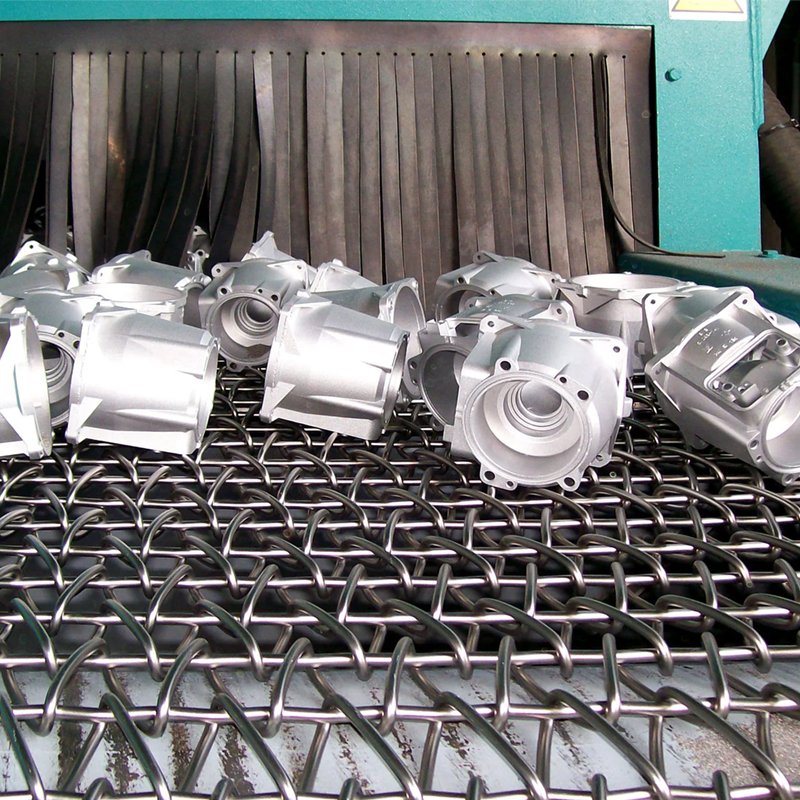
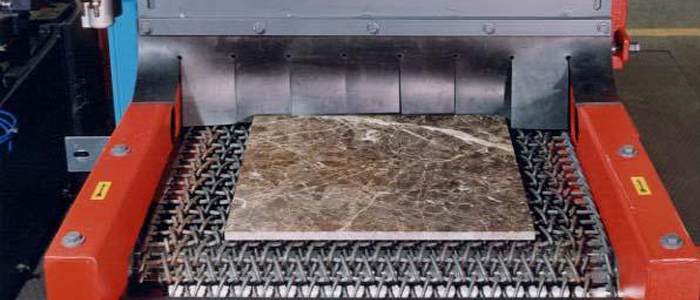
Workpieces are transported via a manganese steel wire mesh conveyor to the blast turbine, achieving metal-clean surface conditions. A key advantage of the mesh belt design is that parts are exposed to blast wheels from all sides, treating both top and bottom surfaces in a single pass without parts touching each other—making it ideal for fragile components.
Key Features:
Heavy-duty reinforced blast compartment constructed with manganese wear-resistant steel Workpieces typically transported via production-line integrated conveyors Manual loading available for small batches without changing blasting parameters or conveying mechanism Metal-cleaned surfaces demonstrate exceptional equipment efficiency.
Example 1:Xinan Technology
DISA has custom-designed and delivered a high-performance mesh belt shot blasting machine for Xinan Technology, specifically engineered to address the surface treatment challenges of precision aluminum and ferrous alloy castings, including flat, thin-walled, and fragile components. Operating in a continuous straight-through mode, the system integrates automatic loading, unloading, and discharge conveyors, all orchestrated by an advanced PLC with part memory functionality to ensure a seamless and orderly production flow.
The core of the system is a robust metal mesh belt crafted from high-strength, wear-resistant manganese steel. This design ensures that workpieces remain isolated during transit through the blast chamber, effectively preventing collision damage or deformation of delicate parts. High-efficiency blast turbines are strategically positioned both above and below the conveyor, delivering synchronous, all-around coverage that completes deburring, cleaning, descaling, deflashing, and etching in a single pass, thereby significantly enhancing manufacturing consistency and throughput.
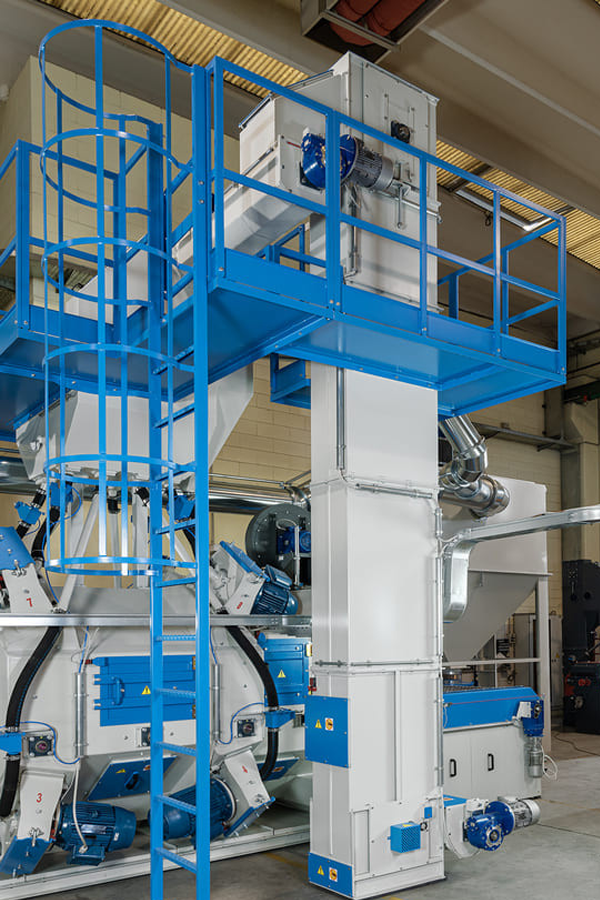
The machine features a comprehensive abrasive recovery and purification loop: spent media is collected at the base, conveyed via screw conveyor and elevator to a top-mounted air-wash separator, where clean abrasive is recycled to the storage hopper while dust and contaminants are diverted to a separate silo for disposal. Constructed with replaceable high-wear liners in critical zones, the unit comes pre-wired with centralized dust extraction ports, with an optional integrated dry cartridge dust collector available. This turnkey solution enables seamless integration into Xinan Technology’s automated production line, eliminating intermediate storage, minimizing logistics distances, and reducing both manual intervention and operating costs to achieve high-quality, cost-effective continuous manufacturing.
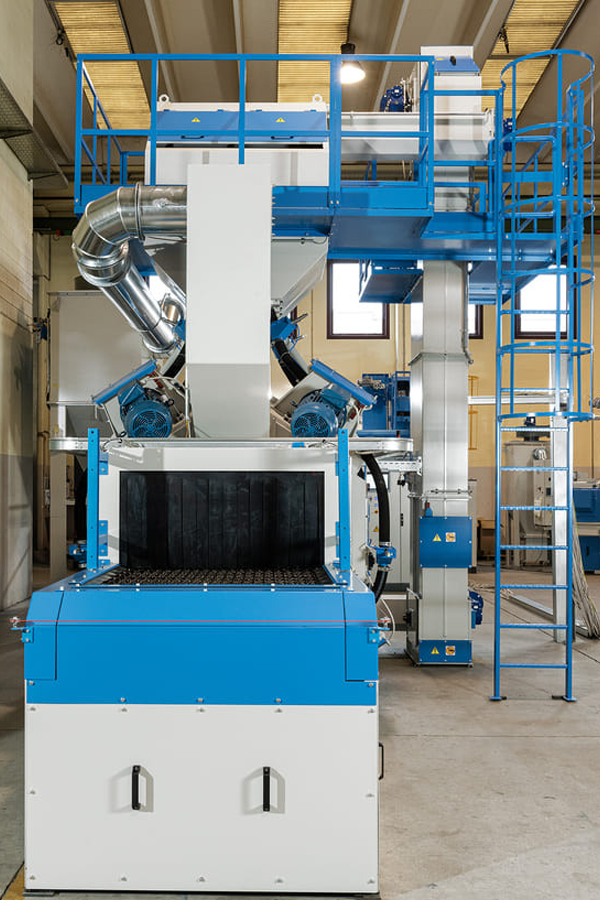
Example 2:Nemark India PVT Ltd
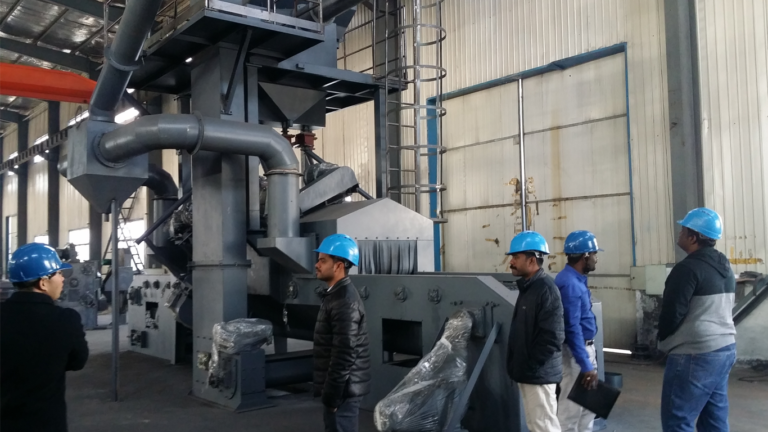
Recently, Disa successfully commissioned a customized mesh belt shot blasting machine for a global 500 automotive components manufacturer. Confronted with critical challenges—including an extremely compact installation footprint, the demand for continuous 8-hour high-intensity shift operations, and stringent noise emission limits—DISA engineered a precision solution: a robust mesh belt system equipped with eight high-efficiency blast turbines to guarantee stable, high-volume throughput. The machine features an advanced abrasive recycling loop where media, after impacting the workpieces, is collected in a bottom hopper, conveyed via screw conveyor to a bucket elevator, and lifted to a top silo for air-wash separation; cleaned, reusable abrasive is returned to the overhead storage hopper, while dust and contaminants are efficiently discharged. To address strict environmental noise regulations, Disa enclosed the unit in innovative double-skin composite soundproofing panels. These panels incorporate a high-performance acoustic foam core that effectively absorbs and isolates internal blasting noise, preventing external propagation. The resulting system delivers a compact, low-noise, and highly efficient operation, enabling the client to streamline production workflows while significantly enhancing cycle times, productivity, and overall capacity.
Have a quick look at all of the individual components
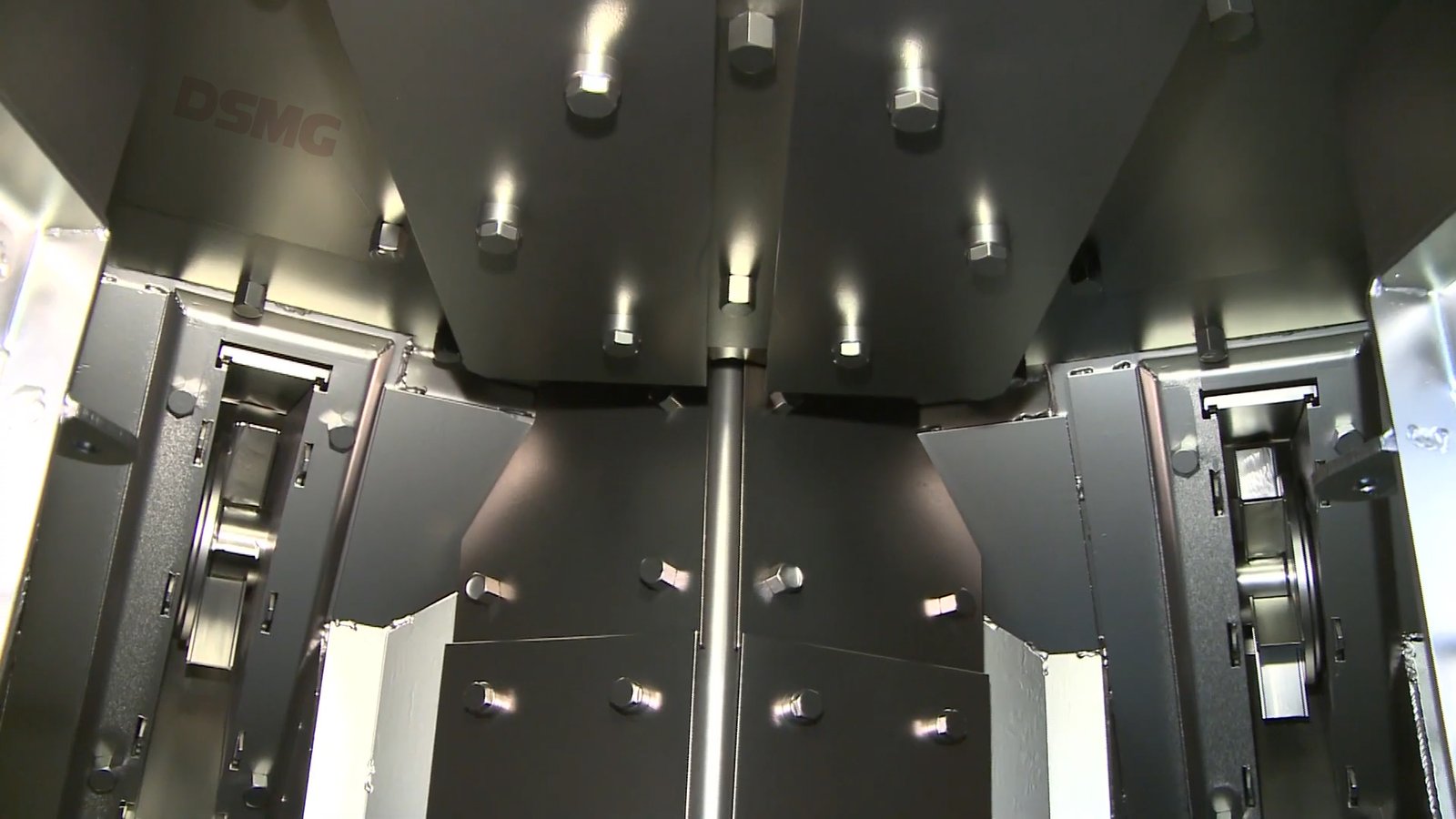
Inside the blasting chamber, within the direct working area of the turbines, replaceable wear protection plates are installed to ensure maximum durability and consistent performance. The high-performance turbines are strategically arranged at staggered angles both above and below the conveyor belt, guaranteeing that all surfaces of the workpiece receive uniform impact for thorough cleaning. The wire mesh conveyor belt itself is constructed from wear-resistant steel, designed to withstand the intense abrasive environment while maintaining long service life.
After exiting the blasting chamber, workpieces pass through a blowoff device to remove residual abrasive. The abrasive media circulates continuously via a screw conveyor and bucket elevator to the top-mounted cleaning station. Within a specialized air sifting system, dust and undersized particles are discharged from the cascading media curtain through adjustable airflow, ensuring only usable abrasive returns to the system.
1) Machine Construction
The shot blast machine’s construction is made of high-quality structural steel and Mn 12/14% manganese steel, sheets and profiles, suitably shaped and welded.
2) Blast wheel
The blast wheels are placed transversely to the direction of movement of the elements, at an angle, in the upper and lower part of the machine, so that the abrasive streams cross in the area of the working chamber.The number of turbines used depends on the version of the machine and the customer’s needs.
The turbine housing is made of special hardened steel. The internal parts of the turbines are protected by replaceable protective plates. Each turbine is equipped with 8 blades and an adjustable device for controlling the abrasive jet. The covers, blades, rotorsand other turbine components are made of wear-resistant material.
More information about extraction system can be found here.
5)Inlet and outlet chambers
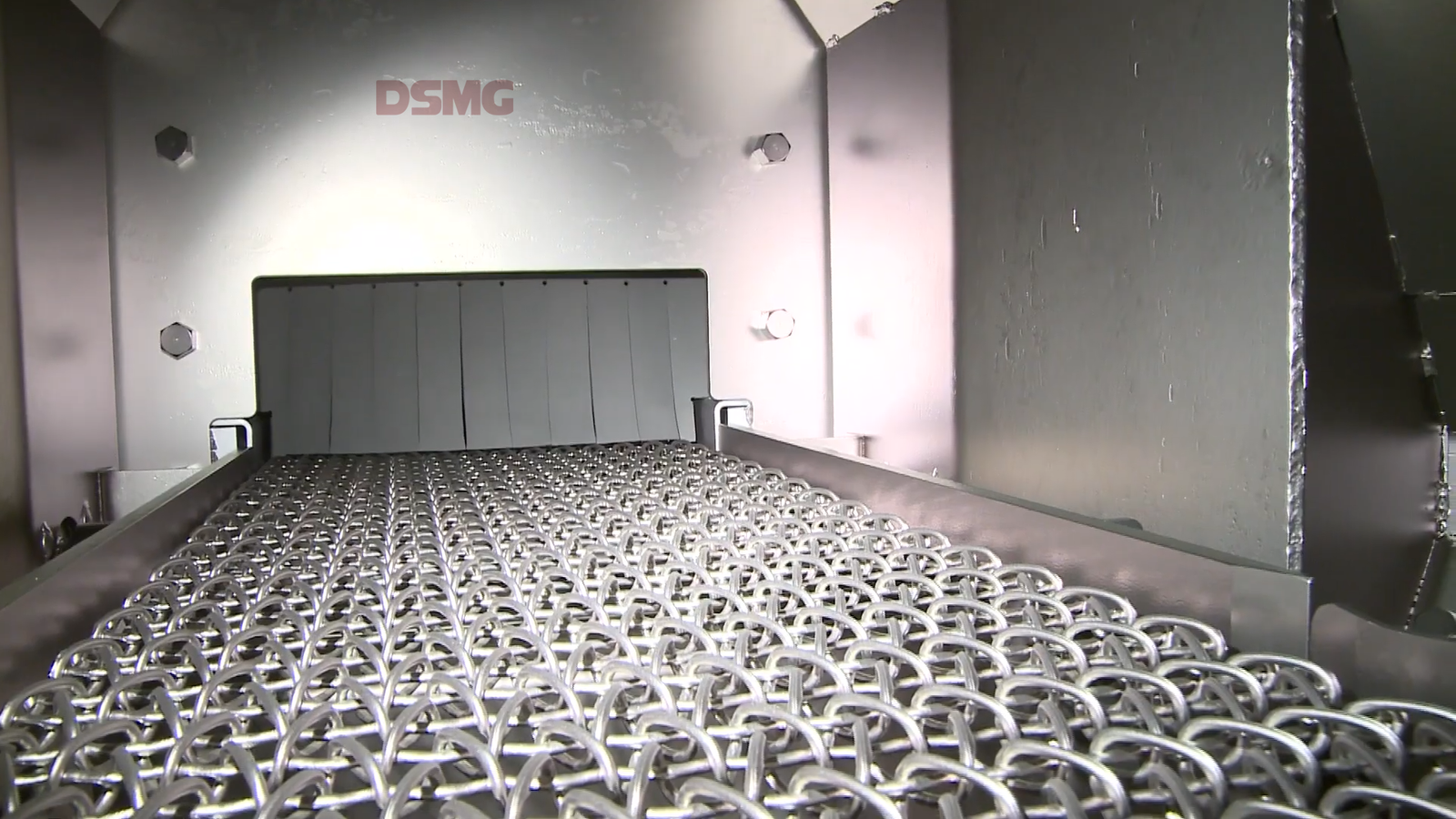
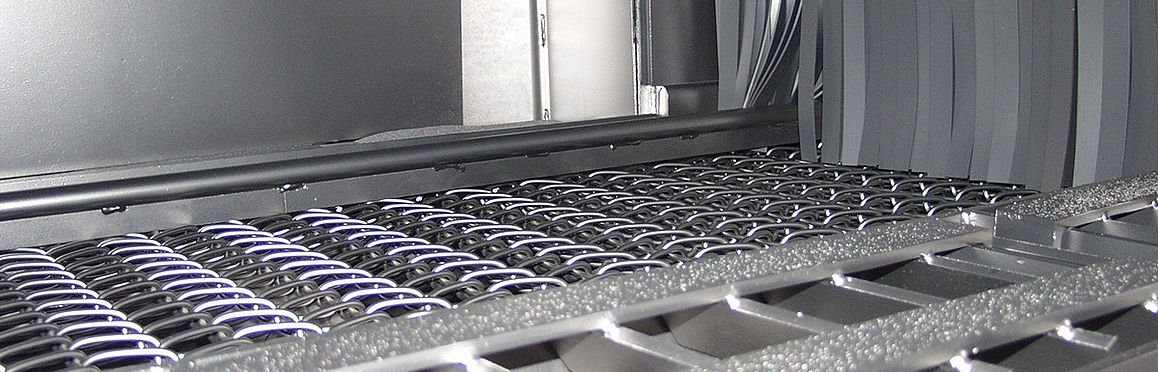
The inlet and outlet chambers are protected against abrasive falling out by a system of rubber, wear-resistant curtains.At the outlet of the device, there are additional blowers to clean the workpieces from dust and abrasive residues.
3) Working Chamber
The interior of the working chamber is lined with abrasion-resistant rubber and additional Mn 12/14% manganese plates in areas directly exposed to the abrasive discharged by the turbines.
3) Wire mesh belt
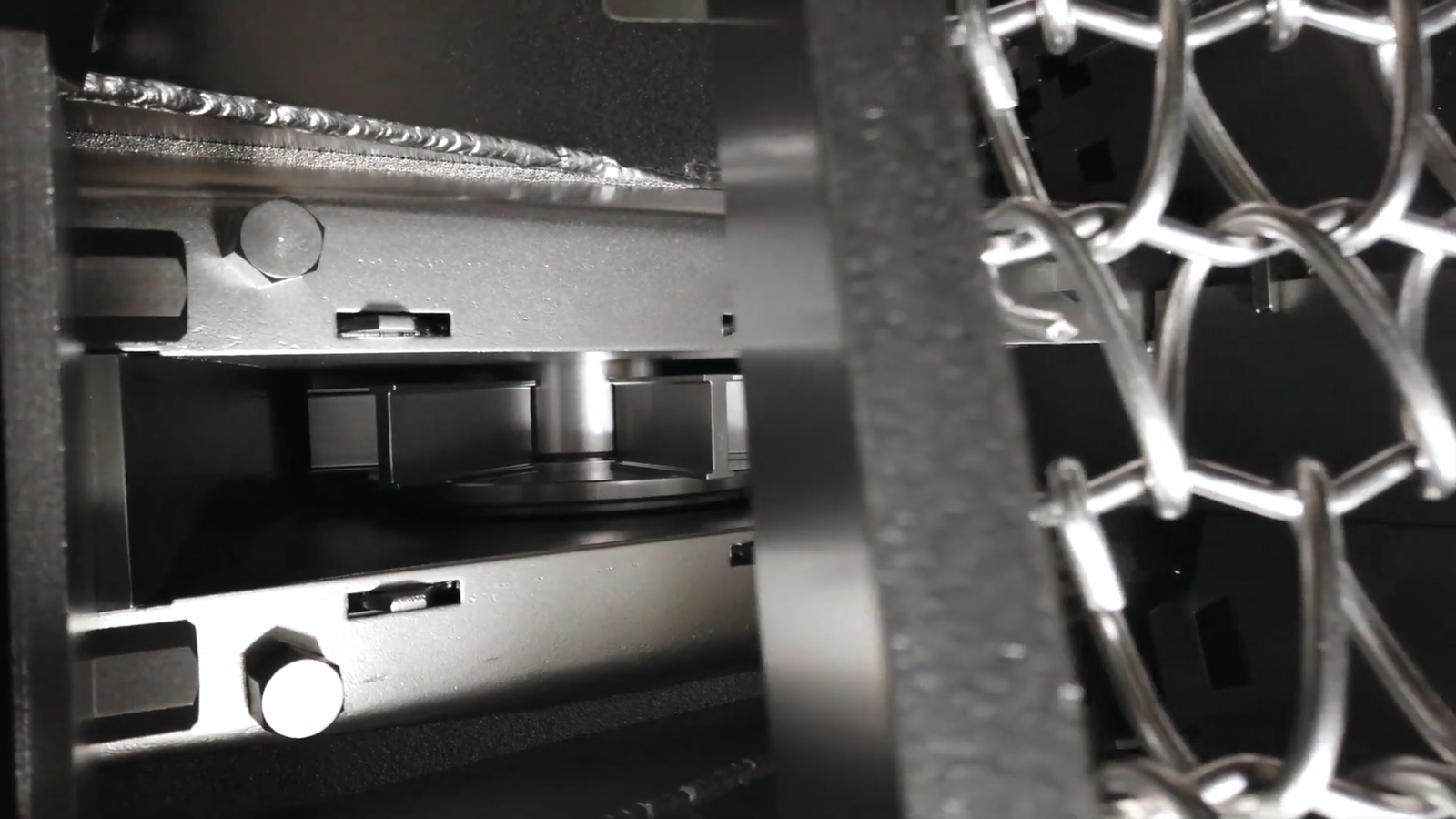
The pieces are fed by a metallic belt conveyor,our high-performance Braided Link Shot Blasting Belt, manufactured with premium Manganese Steel to ensure superior wear resistance and extended service life in demanding abrasive environments. This updated production features a Manganese content of 12%–12.5%, significantly enhancing the belt’s durability against impact and abrasion.
4) Abrasive Recovery
All DISA shot blast machines include an integral abrasive recovery system. After passing through the blast wheel, the abrasive is collected, separated from the resulting dust and other contaminants, and then stored in a hopper, ready for reuse. Collected contaminants are stored in a separate hopper for periodic disposal.
6) Bucket Conveyor
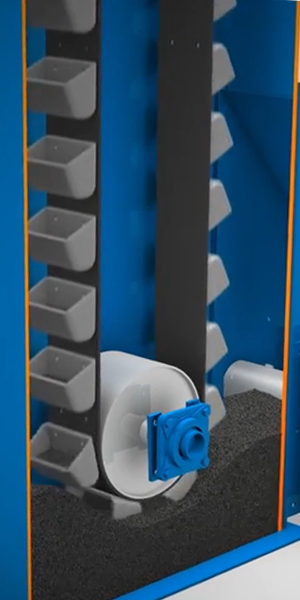
From the screw conveyor, the abrasive is transported to the bucket conveyor. It is made of bent sheet metal and has an inspection door. The bucket conveyor belt is mounted on two cast pulleys, the upper pulley being driven and also used to adjust the belt tension. The bearings are double-sealed. The buckets are bolted to the bucket conveyor belt. The buckets are stamped from a single piece of sheet metal, increasing their durability. The thick and durable conveyor belt is connected with a special connector, which allows for even load distribution. This bonding provides greater resistance to breakage.
6) Abrasive Separator
The abrasive is transported by a bucket conveyor to the separator’s screw conveyor, which is equipped with a rotating screen to separate larger impurities from the abrasive. The abrasive is then moved to a pneumatic separator, which discharges the separated, crushed abrasive, dust, and impurities. The cleaned abrasive is collected in a hopper that feeds the turbines.click here.
8) Abrasive Valves
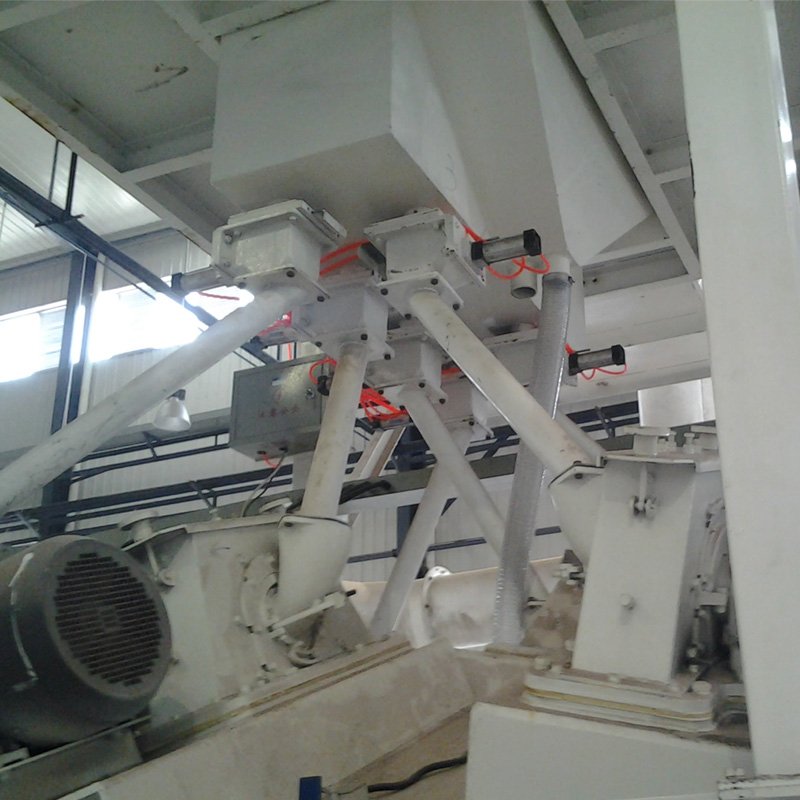
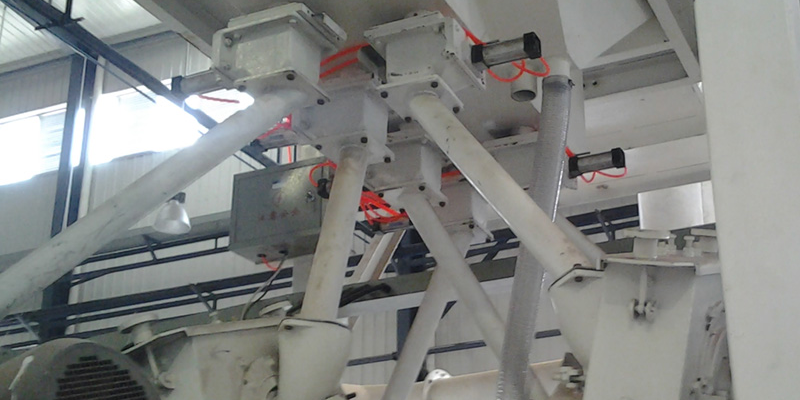
These valves are designed to meter the amount of abrasive feed to the turbines. Each turbine has one metering valve. They consist of a housing (casting) and a part actuated by a pneumatic actuator, which is partially closed and insulated to reduce noise levels and dust emissions. The valve opening is adjusted using a micrometer screw.
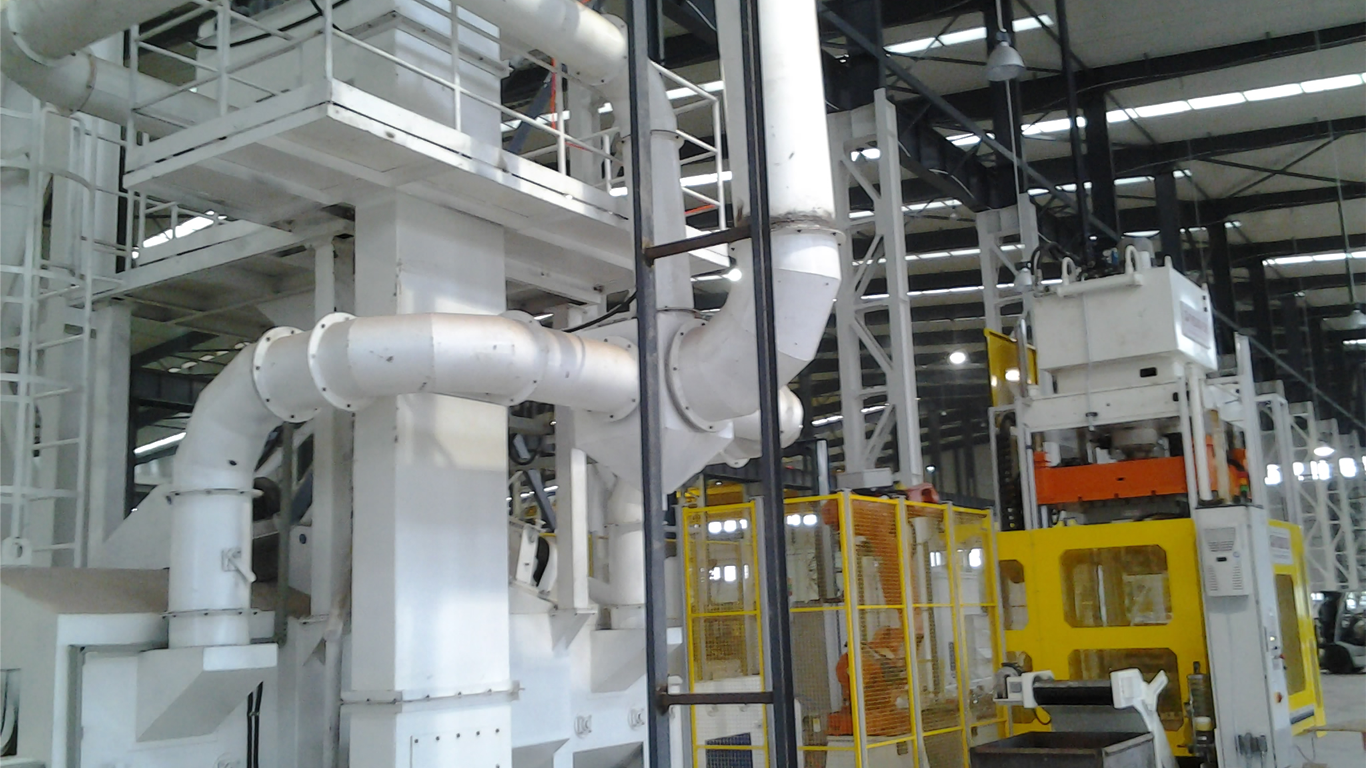
12)Exhaust System
Constructed of sheet steel, forming a strong housing in which the filter cartridges are placed. Air contaminated with dust enters the filter, where it is decanted and sucked in by the filter cartridges. As it passes through the filter, the remaining dust is mechanically separated, and the cleaned air is blown out by a fan. The filter is equipped with an ECONOMIZER system that monitors the cartridge contamination level, ensuring that the cartridges are only shaken off when a sufficiently high level of contamination occurs. The cartridge filter is equipped with a set of nozzles that periodically blow out any remaining dust from the filter cartridges in the direction opposite to the suctioned contaminants, thus increasing the cartridges’ service life and technical efficiency. A pulse of compressed air flows through the filter cartridge in the direction opposite to the normal airflow. As a result, dust is captured, passes through the filter cartridge, and falls into the hopper. The sequence and intensity of the shaking off are adjusted using a special panel.
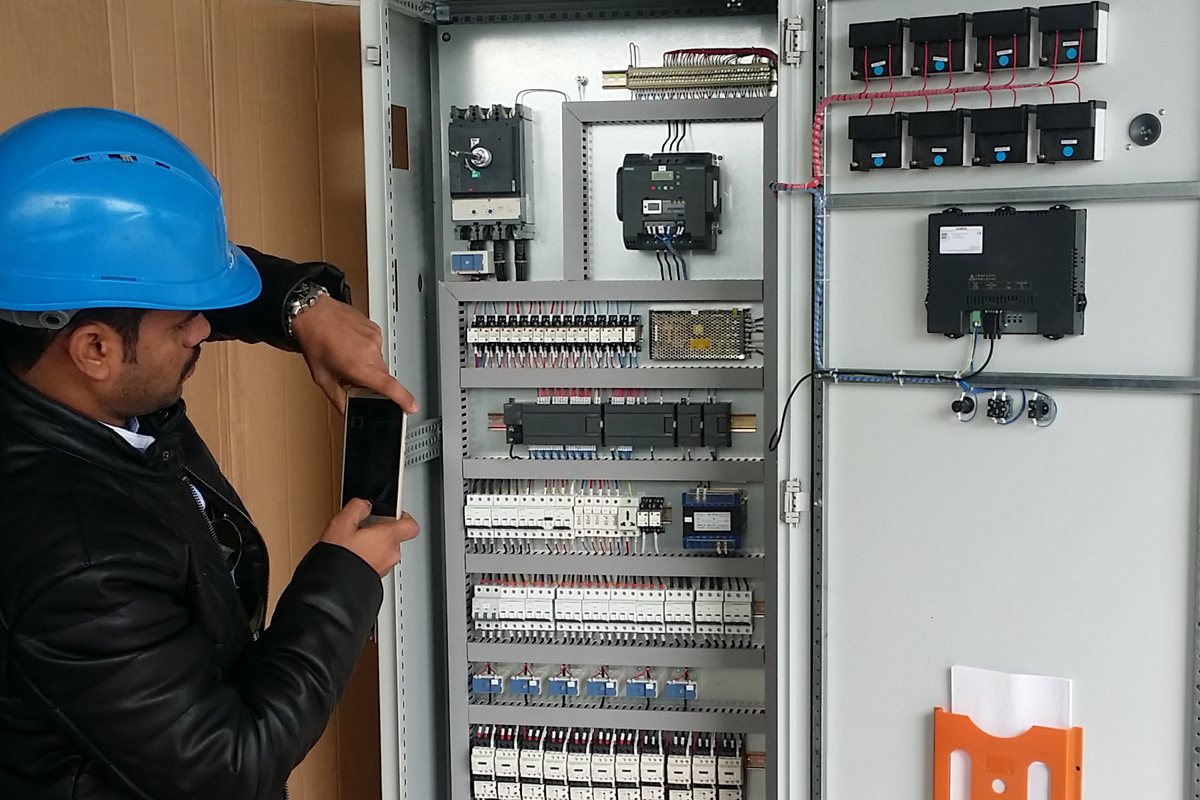
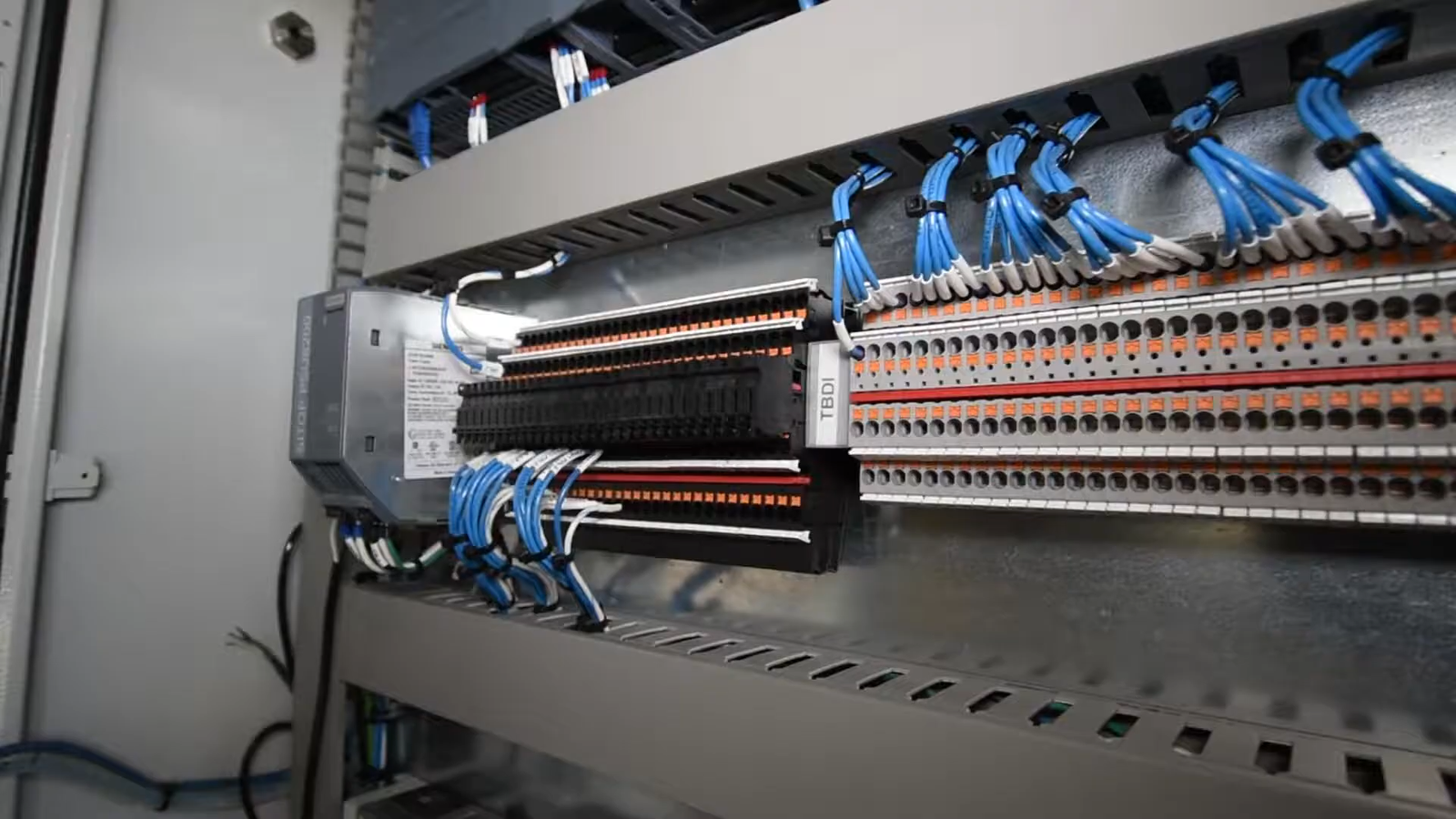
13)Control Cabinet
Including all necessary electrical equipment, buttons,
ammeters, an additional network with a distribution board, thermal relays,
and a central safety switch. All functions are
indicated by indicator lights located on the control panel.
Constructed of welded sheet metal, dust-proof. The control cabinet is manufactured
in accordance with IEC standards and EC guidelines. The mains voltage is 3-phase 400V – 50Hz (1-phase 115V or 230V). The electrical and pneumatic systems on the machine connect all these items to the control cabinet.
10)Reference pictures
Based on two independent support profiles on which the trolleys move, a patented guide system uses a chain driven by a gear motor connected to an electric motor operating at two speeds and equipped with appropriate limit switches. The device allows for the insertion and removal of the hanger from the beginning to the very end of the turnout section (automatically) and movement during shot blasting inside the work cabin.
Contact us:
The product size to be blasted and the throughput speed needed to achieve a desired blasting result on the product determine the overall sizing and capacity of the machine. The table below gives an overview of standard machine sizes and its general specifications. However, Straaltechniek provides bespoke custom solutions to caters to a wide spectrum of industries. Contact us for your specific needs and one of our sales representatives will gather your requirements and offer the best possible solution.