- View Products
- Blasting pots
- Blasting cabinets
- Suction blasting cabinets
- Pressure blasting cabinets
- Blasting machine with rotary basket
- Turntable blasting machine
- Throughput blasting machine
- Roller conveyor blasting machine
- Internal blasting machine
- Multi-nozzle blasting machine
- Satellite table machine
- Blasting installation with sliding door
- Robotic blasting machine
- Precision spotblaster
- Shot blasting room
- Shot blasting container
- Automated shot peening machines
- shot blasting equipment
- wheelblasting machines
- Spinner hanger
- Tumble belt shot blasting machine
- Rotary table blast machine
- Roller conveyor wheelblasting machine
- Overhead monorail conveyor shot blasting machine
- Turn table
- Bogie table work car shot blasting machine
- Continuous tumblast machine
- preservation line
- Stone and brick shot blasting machine
- Anchor chain shot blasting machine
- Steel pipe shot blasting machine
- Gas cylinder shot blasting machine
- Drum type wheelblasting machine
- Mobile concrete floor shot blasters
- Wire mesh conveyor wheelblasting machine
- gas cylinder shot blasting machine
- disa blasting wheels
- Blasting media
- wheelblasting machines
- Blasting media
- Dust collectors
- Blasting with compressed air
- References
- Blasting Knowledge
- Internal Pipe Shot Peening System
- Gas cylinder inside blasting machine
Need advice?
Need advice? Call or WhatsApp us, and you’ll get a reply within 5 minutes!
- (86)-0532-012345678
- 15112345678
- disa@disachina.com
Get in touch
Leave your details below and one of our specialists will be in touch as soon as possible.
Roller conveyor wheelblasting machine
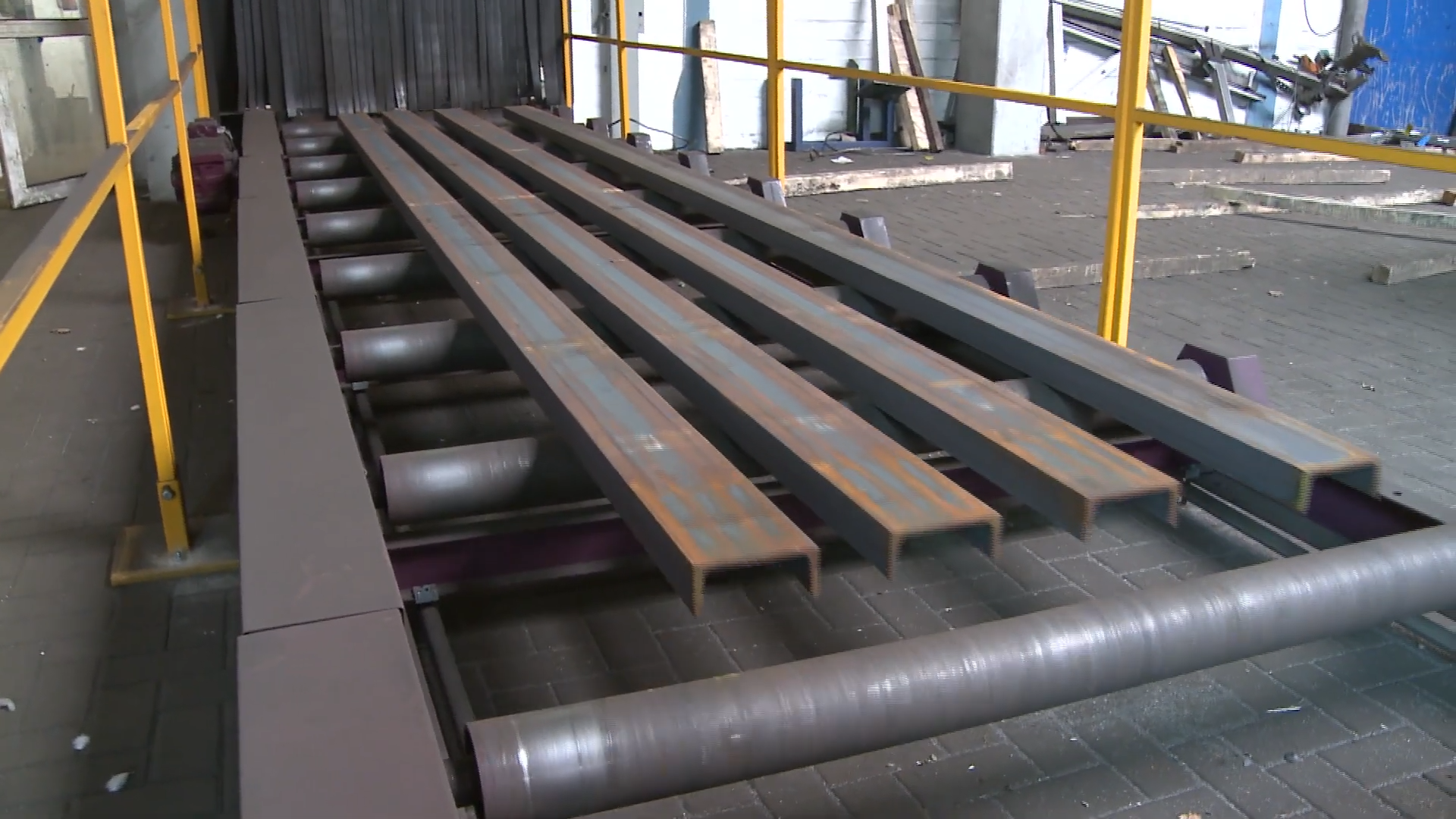
Disa roller conveyor shot blasting machine is designed and manufactured to clean the surface of the large, long and /or flat components such as section steel etc. It is mainly used for removing the rust, scale ,paint and contamination from the steel surface such as large scale H-Beam and I-Beam in the construction and bridge.
The roller conveyor shot blasting machine chamber with protection has a closed metal construction, covered inside with rubber sheets to absorb kinetic shot energy. Sheet metal and rolled profiles are directed by a transport device into the shot blasting chamber where they are treated automatically. Then, the metal enters the final purification chamber where dust and shots are removed. The regeneration of used shots takes place continuously in closed cycles, charging shots via a screw conveyor and an elevator into the separator.
Disa roller conveyor shot blasting machines are made out of high quality components, giving the best blasting results. Long lifetime components are used to minimize the wearof the machine, which is essential on the inside due to the blasting process. Pre-installed blasting programs and automatic functions make the shot blasters fast and easy to work with. The compact design of the shot blaster reduces the required working space to a minimum, without compromising on functionality and quality.
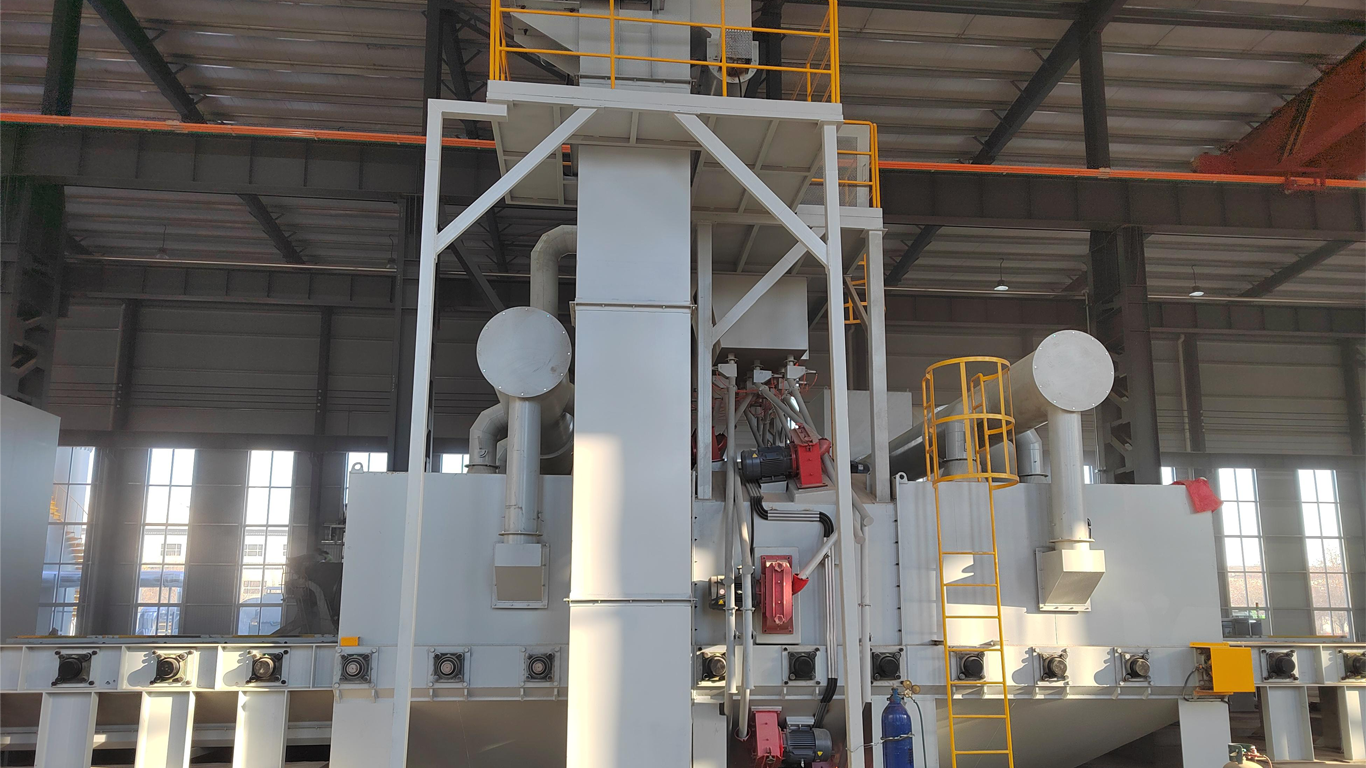
Whatever the need is, Disa works closely with the clients to offer the best possible solutions to optimize the processes. Preconditioning the parts before blasting, the shot blasting process and cleaning with brushes, air knives etc are commonly employed to get the best possible results for the client.
We invite you to go through the following sections to get more details about the construction , working and possibilities of the machine:
Overview
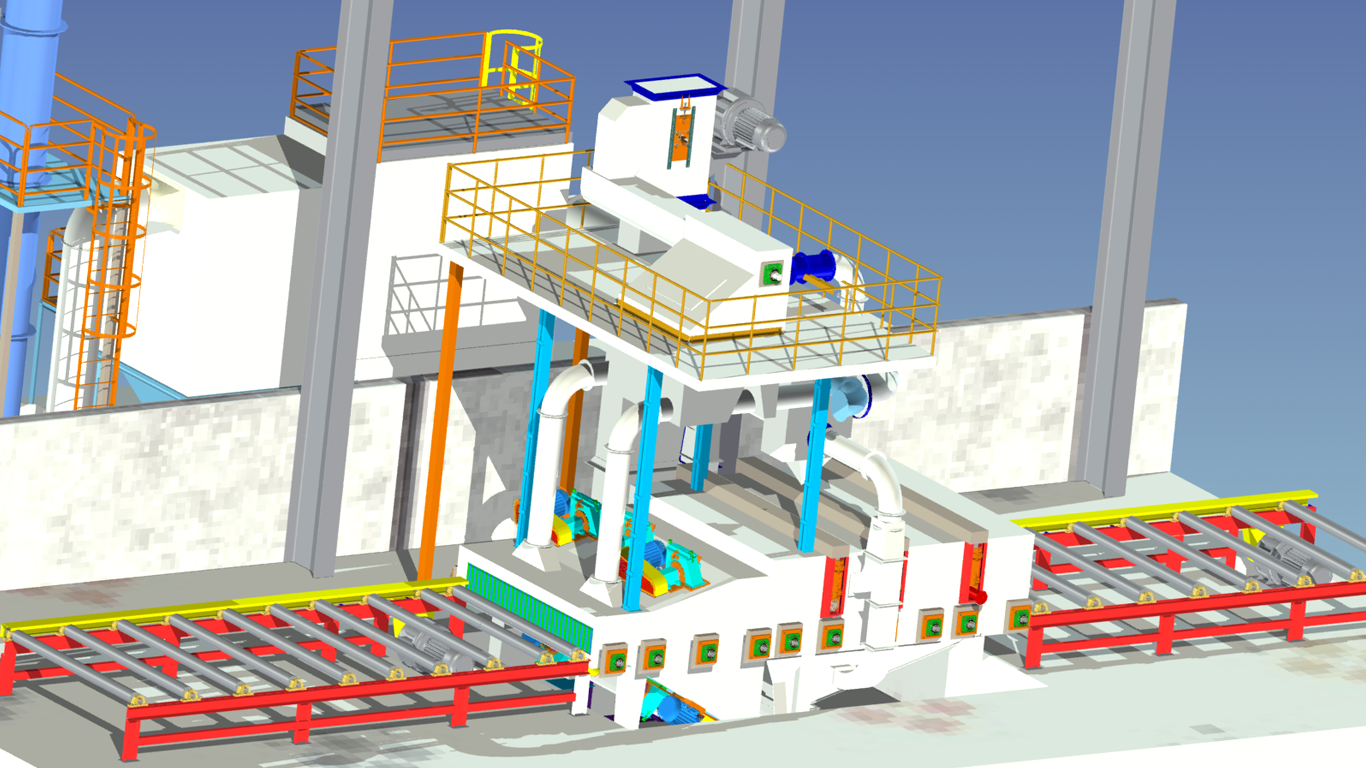
The roller conveyor wheelblast machine consists of a Horizontal Roller Conveyor System, Blast Cabinet with Multiple Blast Wheels driven by Electric Motors, Elevator, Abrasive Separation & Cleaning System, Electricals, and Control Panel.
The aluminium workpiece is loaded onto the entry side of the conveyor, which automatically transfers it into the blast chamber for single-pass shot blasting. The job is thoroughly blasted from all sides to achieve the required finish. The finished workpiece exits onto the outlet conveyor for unloading.
Workpieces are automatically conveyed into the blasting chamber by the roller conveyor, ensuring highly efficient shot blasting from projection devices positioned above and below. Conveyor speed is adjustable via inverter control.
The following sections describe the different modules of the machine:
Parts of a standard roller conveyor wheelblasting machine
1) Blast wheel
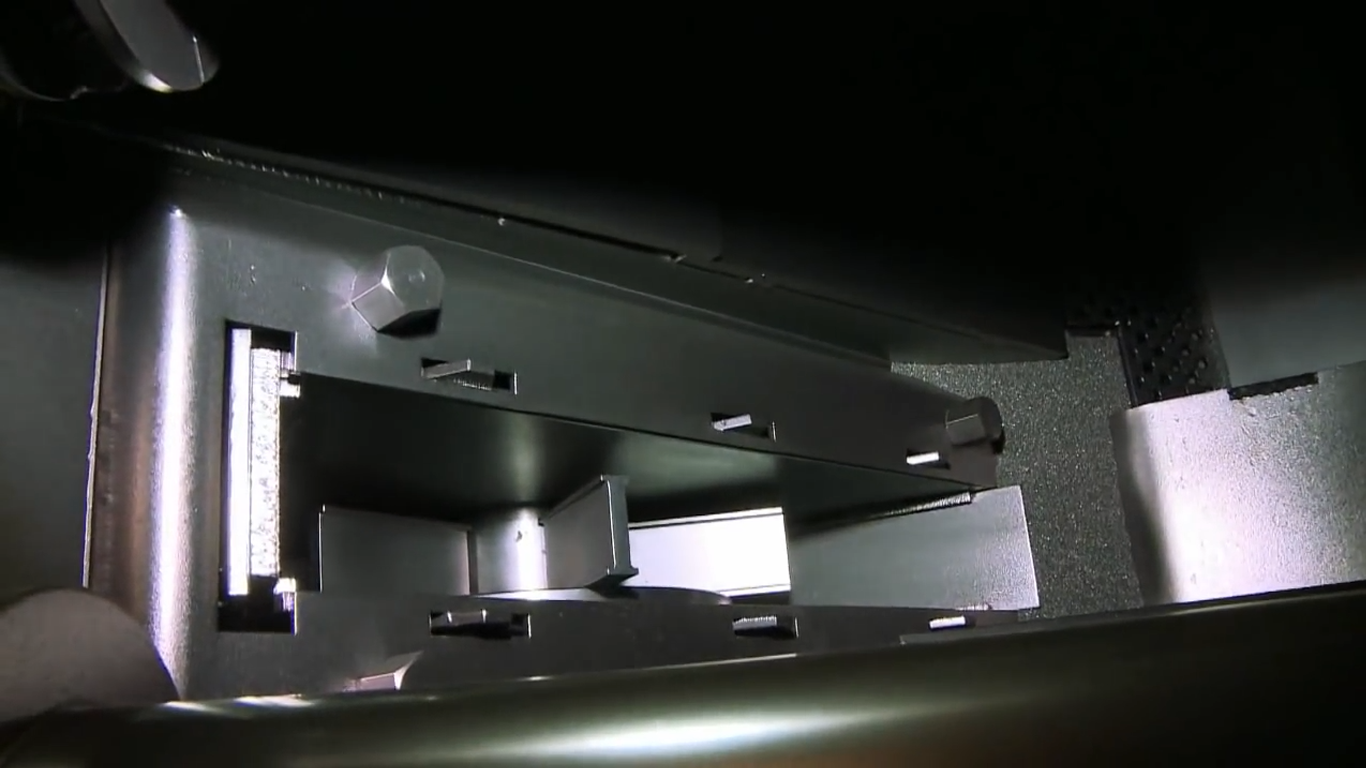
The blast wheel which are used for all disa shot blasters are made according to a design used for many years. Each turbine set has a separate abrasive valve to start the abrasive flow only when material reaches the turbine, so damage to the machine because of running empty is minimized. Each turbine is connected to its motor with flexible couplings supported by double bearings for maximum stability. This reduces the wear of the motor to a minimum.
The Set of 8 blades are hardened to 62-65 HRC, from surface to core, notably improving their efficiency against wear.
The Set of 8 blades is delivered packaged and balanced with a difference of +-5.0 grams between blades of the same set.
2) Shot blasting chamber
The shot blasting chamber is provided with an access door and an anti-misoperation safety device. Shot blasting wheels can be installed on the frame from the top, side, and bottom as needed. The bottom roller table is carefully aligned so that the abrasive jet passes through the gaps of the roller table without direct impact. The shell of the shot blasting chamber adopts a three-layer steel plate structure: a 12mm low-carbon steel main outer shell, a 10mm manganese steel inner liner, and an additional 10mm protective plate at the easily worn parts, all fixed with external bolts for easy replacement; the inner liner is made of high-wear-resistant austenitic manganese steel plate, whose surface hardness can be tripled when impacted without increasing brittleness, effectively protecting the shell and extending its service life. After leaving the shot blasting area, the workpiece enters the multi-stage cleaning section.
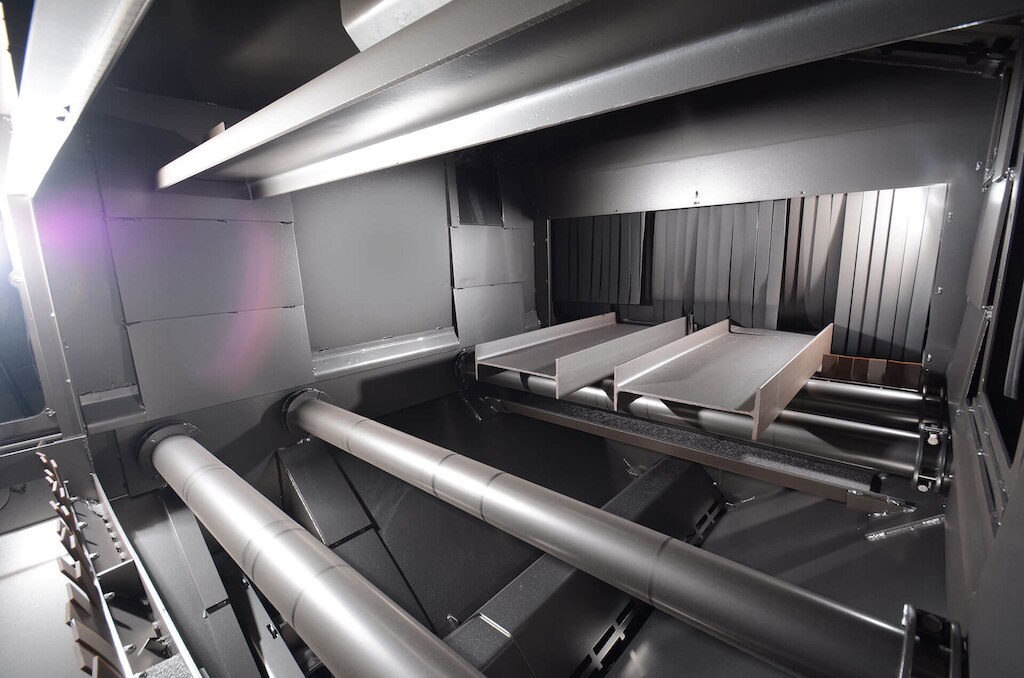
Inspection doors for maintenance is provided in the blasting chamber which are implemented with fool proof safety features for proper and safe functioning.
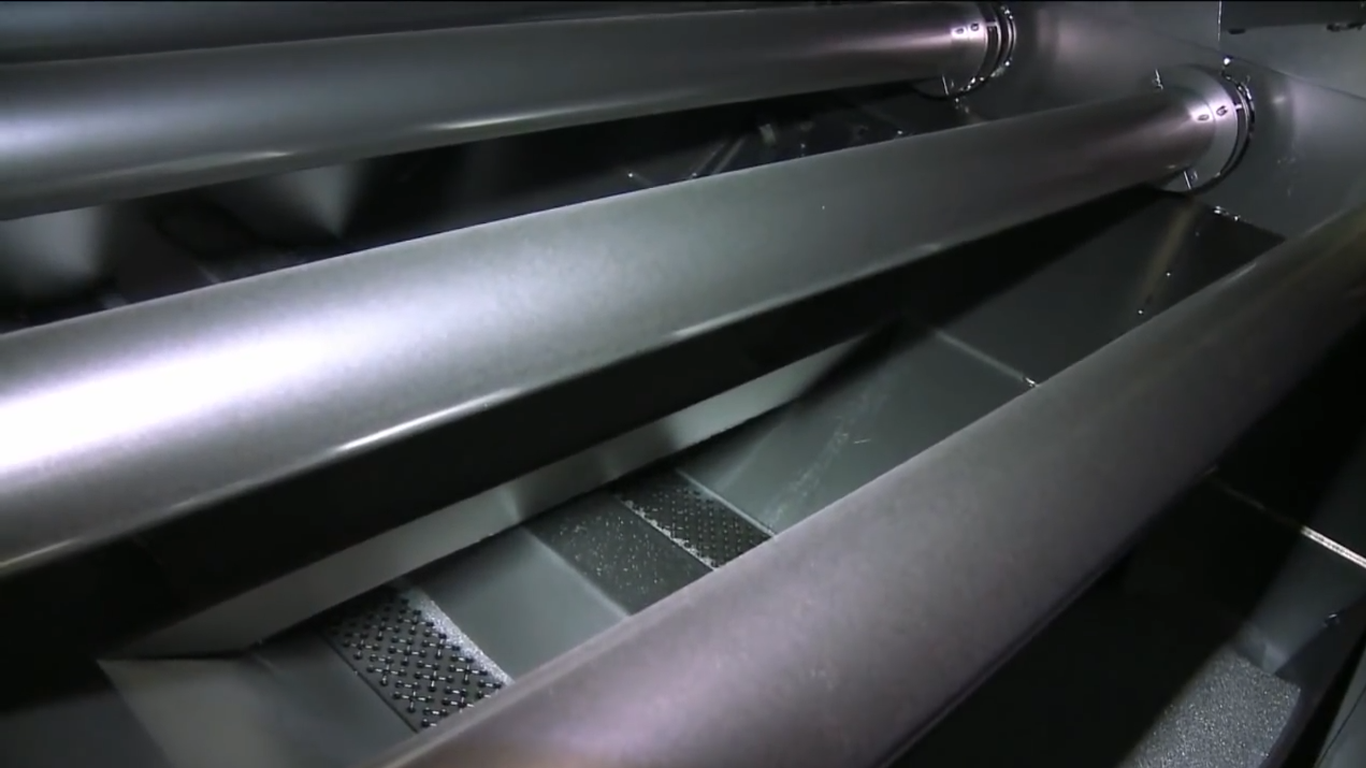
3) Hardened rolls
The rolls inside the blasting cabinet are from thick hardened steel to make sure they do not wear during the blasting process.In other sections of the machine, standard structural steel rollers are employed.
3)Entrance and exit sections
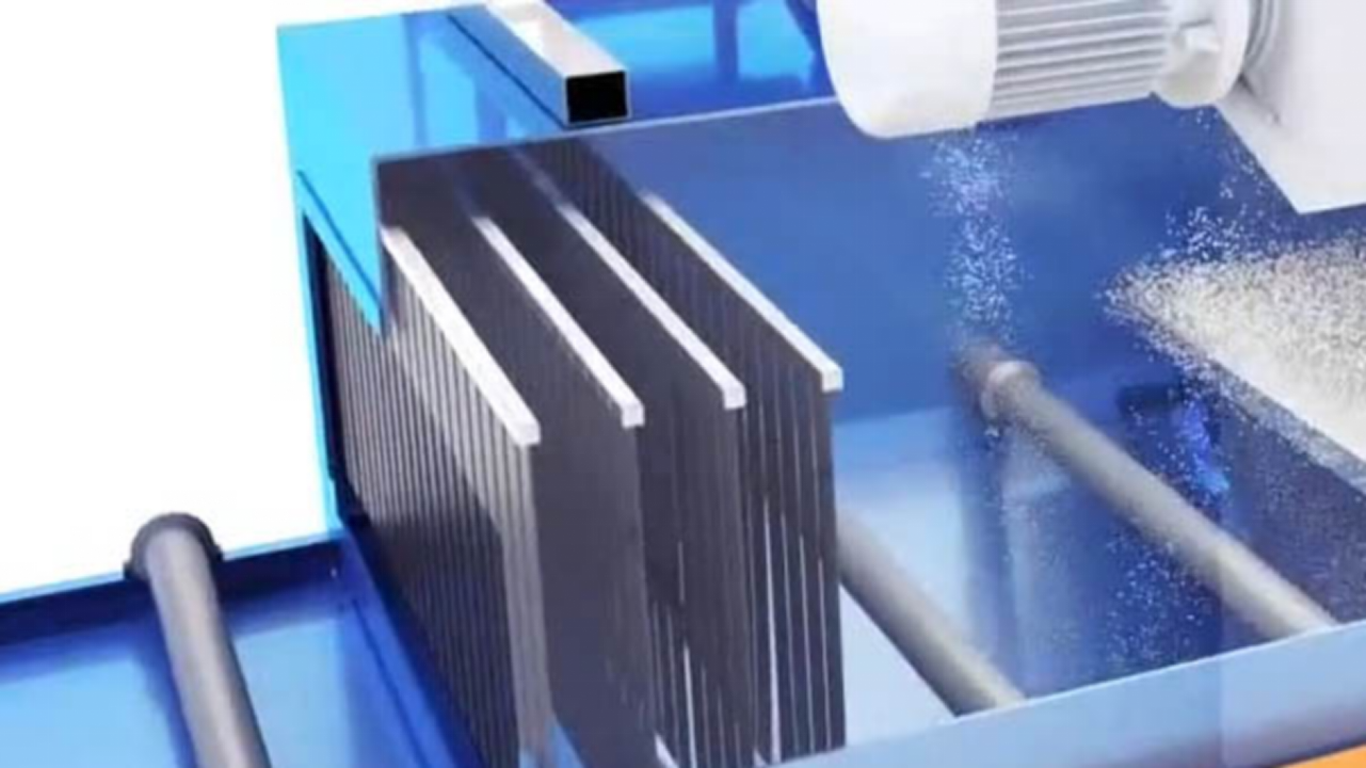
Both the entrance and exit sections sealed auxiliary chambers are equipped with rubber curtains, through which the shot blasted parts enter and exit the shot blasting chamber. The entrance and exit areas are provided with a suction system with a labyrinthine passage, which can suck away the abrasive that may escape. At the same time, the labyrinth structure can block larger particles and make them fall back into the machine cavity. The exit auxiliary chamber is equipped with a special roller brush to clean the abrasive accumulated on the surface of the workpiece,the brush and blow off unit cleans the material from abrasive after blasting. The height of the brush is automatically adjusted using an infeed light curtain that measures the height of the material.
4)Screw conveyors
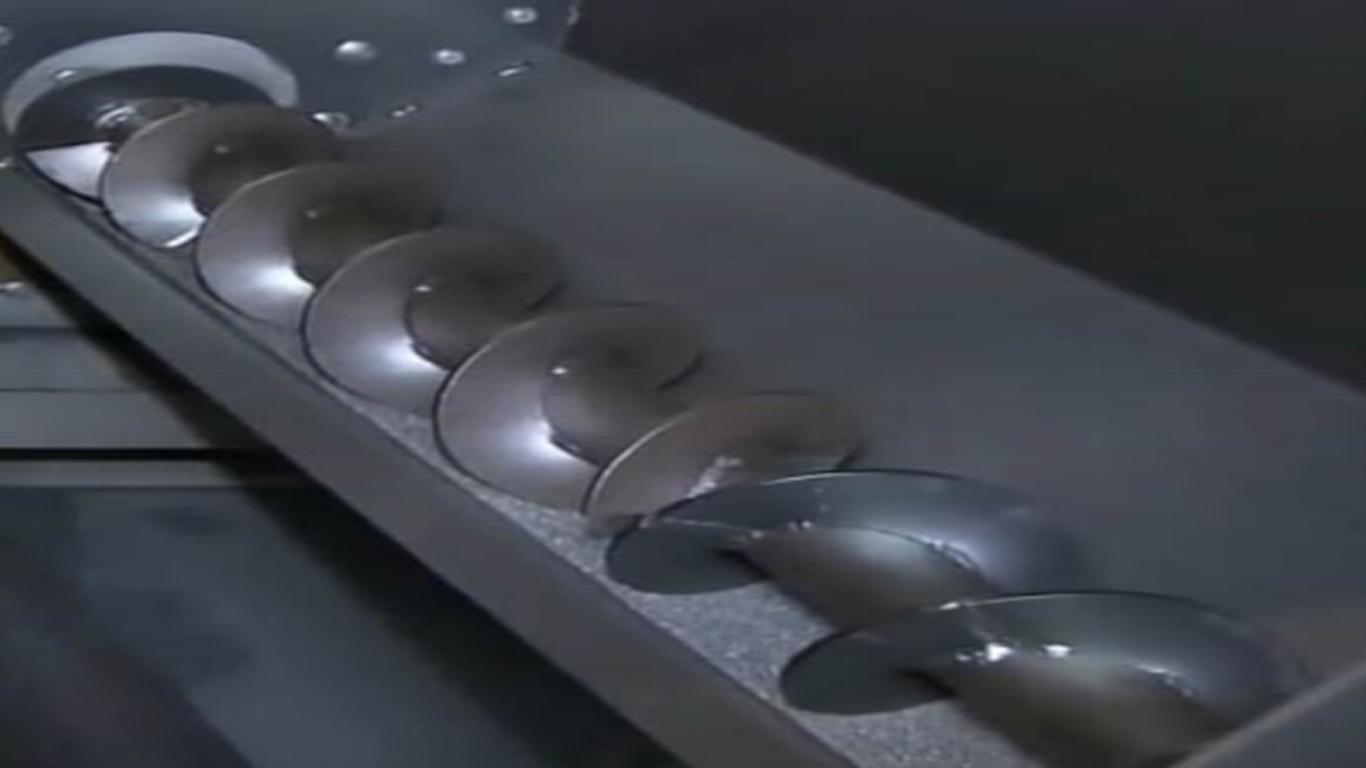
6 mm high-quality carbon steel welding is adopted for the shell;
16Mn material is adopted for the blades and wear-resistant material is welded on the top of the blades;
Labyrinth seal is adopted in order to prevent abrasives from overflow;
Stopping detection device is arranged
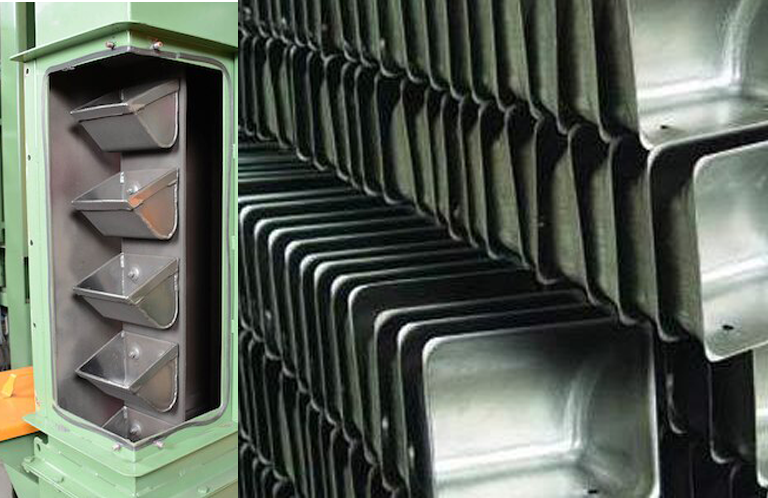
5) Hoppers and Bucket elevator
4-6mm high-quality carbon steel welding is adopted for the shell;
Anti-reverse mechanism is adopted on the top;
Stopping detection device is arranged at the bottom。
With fabric-reinforced rubber belt, wear-resistant malleable iron buckets, tensioning device, and bearing.
The elevator buckets are built in cast nodular iron, which is highly resistant to abrasion.
Pulse wheels are installed on the lower shaft of the elevator and the working condition of the elevator can be detected. The signals can be timely fed back to PLC for processing, so that safe operation of the machine is assured.
5) Media cleaner and silo
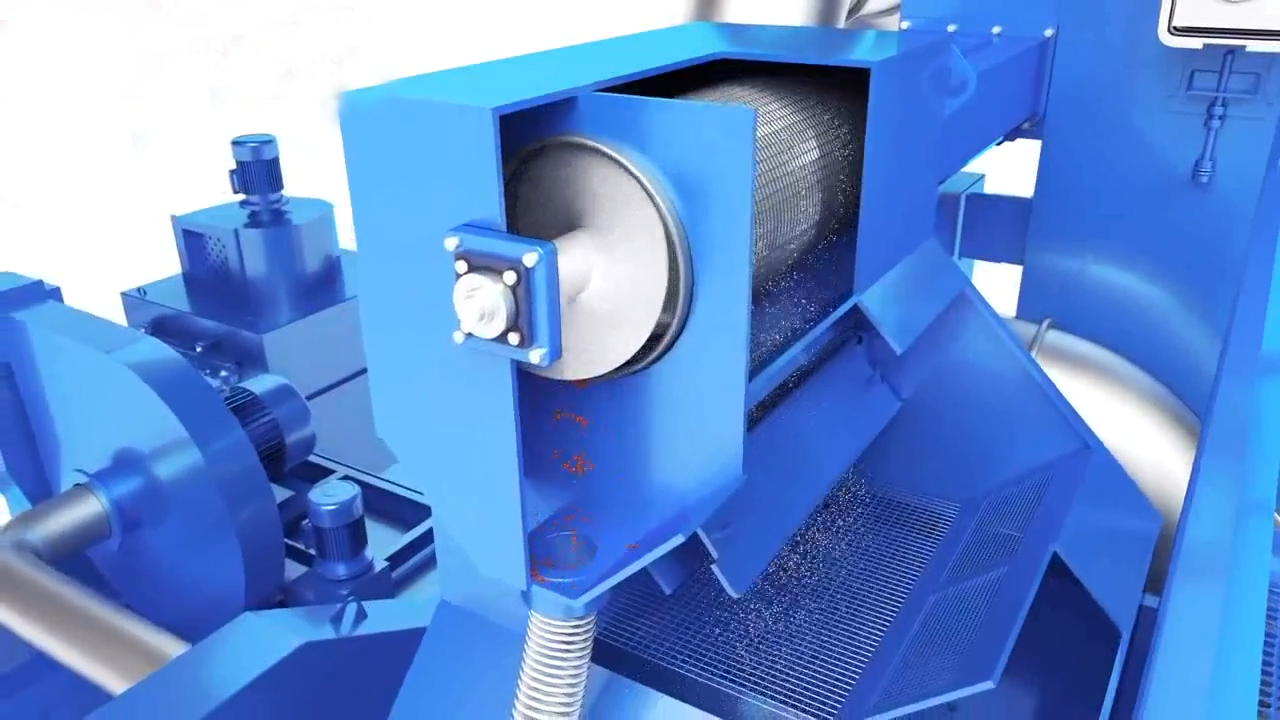
The feed pipe is a flexible hose connecting the storage hopper to the blasting wheel. A sliding gate valve located beneath the storage hopper can be closed for maintenance purposes. Connected to the feed pipe is an abrasive control valve positioned directly above the blasting machine, which is controlled by a pneumatic cylinder for stroke adjustment. This enables remote control of the blasting capacity, allowing the abrasive control valve to be closed when needed. The valve features fine adjustment capability, providing precise control over the flow rate and consumption of the supplied abrasive media..
5) Abrasive control valve
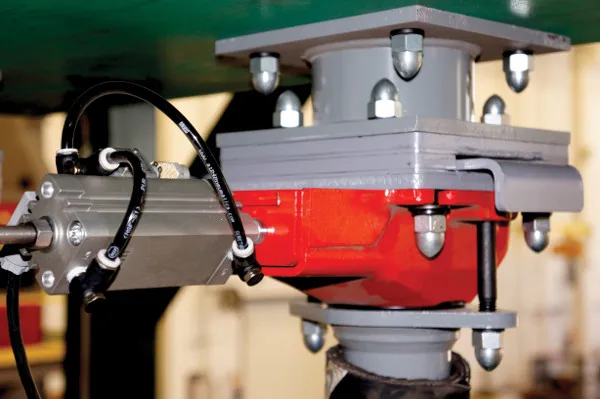
The feed pipe is a flexible hose connecting the storage silo to the blasting wheel. A sliding gate valve located beneath the storage hopper can be closed for maintenance purposes. Connected to the feed pipe is an abrasive control valve positioned directly above the blasting machine, which is controlled by a pneumatic cylinder for stroke adjustment. This enables remote control of the blasting capacity, allowing the abrasive control valve to be closed when needed. The valve features fine adjustment capability, providing precise control over the flow rate and consumption of the supplied abrasive media.
5) Abrasive control valve
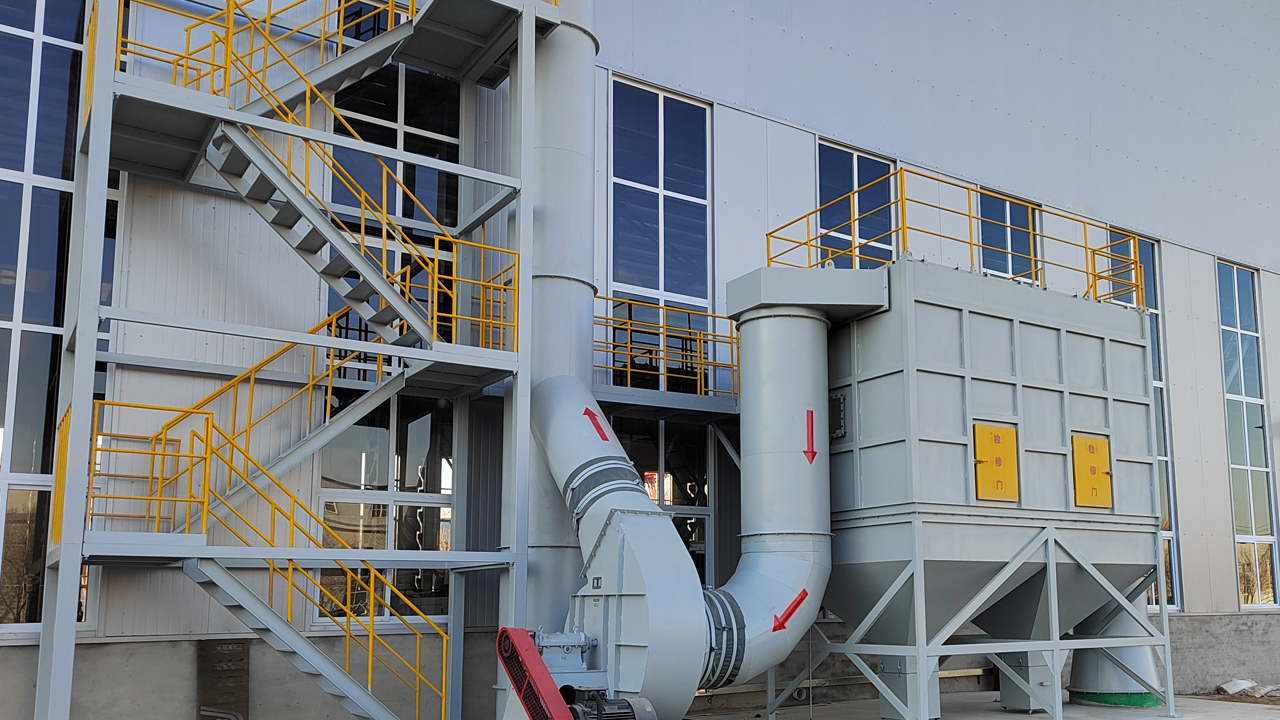
Dust-laden air enters the collector from the side into a settling and equalizing compartment, where air velocity decreases and flow distributes evenly across the settling area. Air then flows upward, causing heavier dust particles to settle while finer particles rise into the filter tubes. Clean air passes through the tubes and exhausts via the blower.
Filter tubes are shaken mechanically or manually at regular intervals to remove accumulated dust, which collects in the collector tray for periodic removal. The filter bags are made of satin weave filter cloth with seams multiple-stitched using heavy cotton thread.
Optional accessories including Exhaust Silencers and Pressure Differential Controls are available.
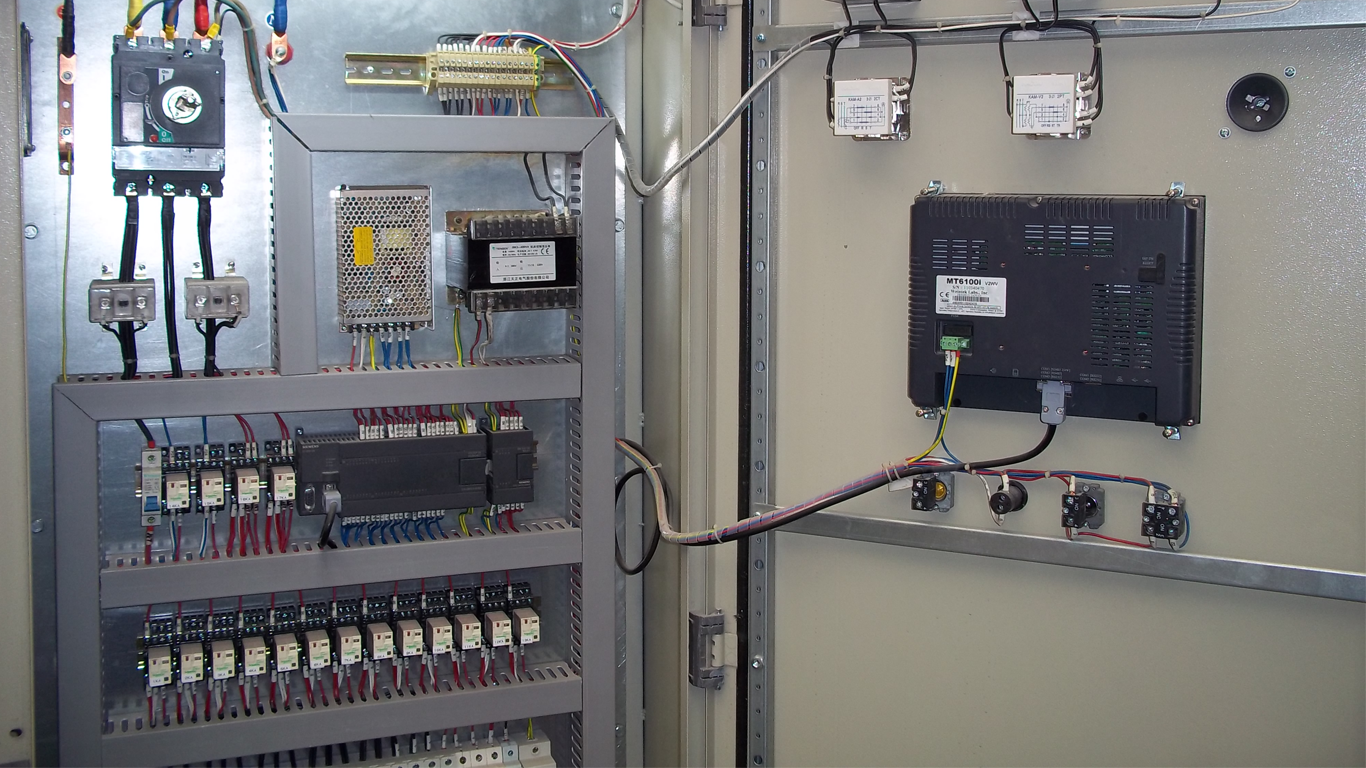
5) Electrical control system
The electrical control system features an independent IP-54 dust-proof control panel manufactured to CE standards with interlocking controls. Instrumentation includes ammeters for each throwing wheel, voltmeter, and timers for blasting operation. Protection components comprise contactors, relays, push buttons, isolation and emergency switches, safety limit switches, grounding system, HRC fuses, and indicating lamps, with built-in safety features such as motor shutdown when door opens. Power distribution includes a transformer for low-voltage consumption, complete machine wiring with cables, protection guides, and terminal connections within the electric panel.
The separator can be adjusted at any stage during the shot falling and separation process, as well as during the washing phase and waste removal. Depending on the abrasive type, this separator allows you to determine the particle size to be retained during the process, significantly reducing wear on machine components.
Reference pictures