
- View Products
- Blasting pots
- Blasting cabinets
- Suction blasting cabinets
- Pressure blasting cabinets
- Blasting machine with rotary basket
- Turntable blasting machine
- Throughput blasting machine
- Roller conveyor blasting machine
- Internal blasting machine
- Multi-nozzle blasting machine
- Satellite table machine
- Blasting installation with sliding door
- Robotic blasting machine
- Precision spotblaster
- Shot blasting room
- Shot blasting container
- Automated shot peening machines
- shot blasting equipment
- wheelblasting machines
- Spinner hanger
- Tumble belt shot blasting machine
- Rotary table blast machine
- Roller conveyor wheelblasting machine
- Overhead monorail conveyor shot blasting machine
- Turn table
- Bogie table work car shot blasting machine
- Continuous tumblast machine
- preservation line
- Stone and brick shot blasting machine
- Anchor chain shot blasting machine
- Steel pipe shot blasting machine
- Gas cylinder shot blasting machine
- Drum type wheelblasting machine
- Mobile concrete floor shot blasters
- Wire mesh conveyor wheelblasting machine
- gas cylinder shot blasting machine
- disa blasting wheels
- Blasting media
- wheelblasting machines
- Blasting media
- Dust collectors
- Blasting with compressed air
- References
- Blasting Knowledge
- Internal Pipe Shot Peening System
- Gas cylinder inside blasting machine
Need advice?
Need advice? Call or WhatsApp us, and you’ll get a reply within 5 minutes!
- (86)-0532-012345678
- 15112345678
- disa@disachina.com
Get in touch
Leave your details below and one of our specialists will be in touch as soon as possible.
What are the main blasting methods available?
Compressed Airblasting is the most traditional and widely adopted method. It uses high-pressure air generated by an air compressor to propel abrasives through a nozzle at high speed onto the workpiece surface.
Suction Type Air Blasting
Negative pressure at the nozzle draws abrasives into the airflow. It features a simple equipment structure and is well suited for small-scale or intermittent operations.
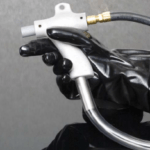
Pressure-Fed Type Air Blasting
Abrasives are forced into the airflow from a pressurized tank. This type is ideal for long-distance conveying and large-area operations, offering high working efficiency.
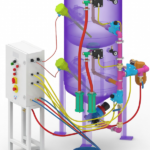
Comparison:
Choose the Pressure-Fed Type if you need high productivity, long hose runs, coverage of large surface areas, or heavy industrial work. In contrast, select the Suction Type when simplicity, low cost, portability, occasional or small-scale blasting, and easy setup with minimal maintenance are your main priorities.
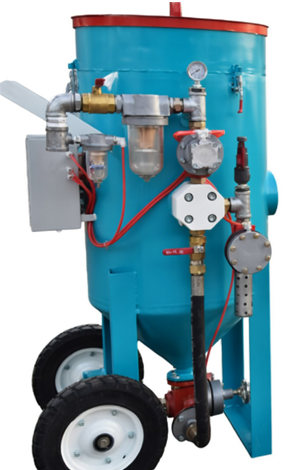
Injection blasting vs compressed air blasting:
Comparison: Pressure-Fed Type vs Suction Type
| Aspect | Pressure-Fed Type | Suction Type |
|---|---|---|
| Working Principle | Abrasives are stored in a pressurized tank and pushed into the high-pressure airflow. | Negative pressure (Venturi effect) at the nozzle sucks abrasives from a hopper into the airflow. |
| Equipment Complexity | More complex — requires a sealed pressure vessel/tank. | Simple structure — no pressure tank needed for abrasives. |
| Operating Distance | Excellent — suitable for long-distance conveying (long hoses). | Limited — best for short-distance operation. |
| Application Scale | Ideal for large-area, continuous, and heavy-duty operations. | Best suited for small-scale, intermittent, or light-duty work. |
| Efficiency | High working efficiency and faster abrasive delivery. | Lower efficiency; slower abrasive flow rate. |
| Air Consumption | Generally more efficient use of compressed air. | Higher air consumption for the same abrasive output. |
| Setup & Maintenance | More setup time and higher maintenance (pressure vessel). | Quick setup, low maintenance, and easier to operate. |
| Cost | Higher initial equipment cost. | Lower equipment cost and simpler system. |
| Typical Applications | Large steel structures, shipyards, heavy machinery, long pipelines, and production lines. | Small parts, maintenance work, touch-up blasting, workshops, and portable use. |
| Surface Finish | Consistent and aggressive cleaning. | Slightly less aggressive; good for lighter cleaning. |
More information?
Ask our advisers your questions by telephone, WhatsApp or via email (button below).